Hair care private label brands can be launched with limited capital if you structure your decisions correctly from day one. The key is not scale, but controlling product scope, manufacturing choices, and MOQ-driven risk. This guide breaks down a budget-constrained path to launch and grow step by step.
Key Takeaways:
- Launching a hair care private label brand on a budget requires structured decision-making rather than high upfront investment
- Define your brand direction first based on the target market, positioning, and available budget
- Start with a lean product line (typically 1–3 SKUs such as shampoo, conditioner, and treatment)
- Choose a low MOQ hair care manufacturer that offers stock formulas and flexible packaging options
- Use a small pilot order to enter the market and reduce financial risk
- Validate demand through real sales and customer feedback before scaling production
- Adjust product formulation, packaging, and positioning based on market response
- Scale gradually only after consistent demand is proven
Define Your Hair Care Brand Direction Based on Budget
At the earliest stage of a hair care private label, your budget determines everything: positioning, product type, and manufacturing depth.
A realistic direction typically includes:
- Entry-level brand: mass market focus, stock formulas, minimal customization
- Mid-tier brand: improved formulas with moderate branding and positioning
- Premium brand: custom formulas with higher investment in packaging and branding
Key decision logic:
- Lower budget → rely more on standard systems
- Higher budget → allow more customization
A strong hair care private label strategy always starts with clarity of constraints, not product ambition.
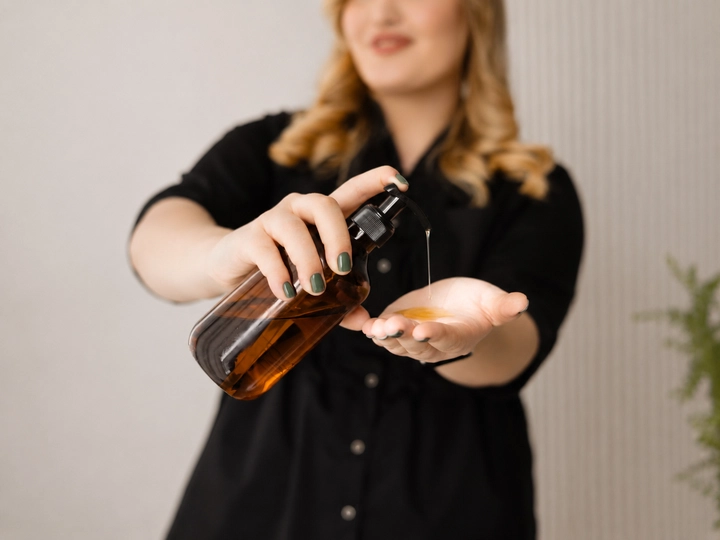
Build a Lean Hair Product Line for a Low-Cost(1–3 SKUs)
A private label hair care products strategy should begin with minimal SKU exposure to reduce upfront costs and inventory risk.
Recommended starter structure:
- Shampoo (core product)
- Conditioner (support product)
- Hair mask (optional expansion)
Why lean matters:
- Each SKU increases MOQ pressure
- Packaging cost multiplies per item
- Inventory risk scales quickly
A lean setup is the foundation of any hair care private label business operating under budget constraints.
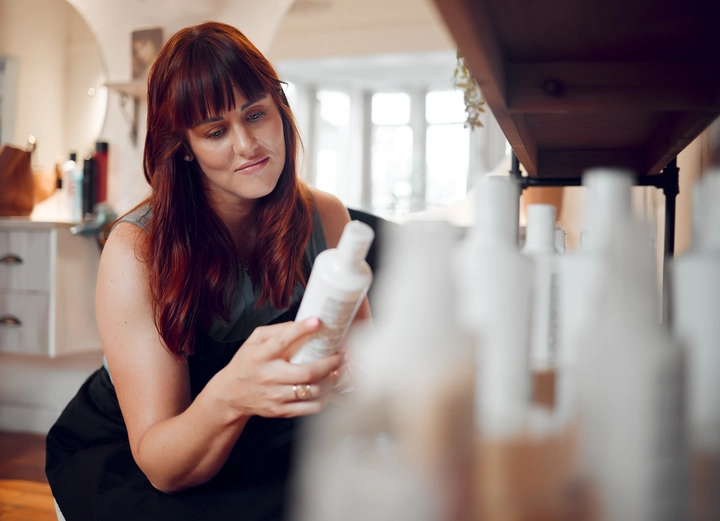
Choose a Manufacturer Based on Formula, Packaging, and MOQ
Selecting an OEM hair care manufacturer is not just a sourcing decision—it defines your entire cost structure.
Key evaluation dimensions:
1. Formula Options
- The hair care manufacturer’s current formulation = lower cost, faster launch
- Custom formulas = higher cost, longer timeline
2. Packaging Capability
- Standard bottles = budget-friendly
- Custom packaging = branding-driven but expensive
3. MOQ Flexibility
- Low MOQ (500–1000) = startup-friendly
- High MOQ = capital-intensive
A capable OEM hair care manufacturer should balance all three, not just production.

Launch Small with a Pilot Order to Validate Your Hair Care Brand
A controlled pilot order is the most cost-efficient way to launch a hair care private label without overcommitting capital.
Typical pilot structure:
- Small batch production
- Limited SKU launch
- Focus on 1–2 core products
This approach allows you to:
- Test market response
- Avoid overstocking
- Adjust pricing and positioning early
A disciplined launch phase reduces early-stage failure risk in any hair care private label business.
Use Market Feedback to Refine Brand Positioning
Working with private label hair care product manufacturers allows brands to continuously refine formulas and positioning based on early market data.
Feedback signals include:
- Reorder rate
- Customer satisfaction
- Packaging acceptance
- Price sensitivity
Refinement actions:
- Adjust fragrance or texture
- Improve packaging perception
- Reposition product claims
The most successful hair care private label brands evolve after real feedback, not before launch.
Scale Your Hair Care Brand Step by Step
Scaling a hair care manufacturer private label operation should be demand-driven, not assumption-driven.
Growth phases:
| Stage | Action |
|---|---|
| Phase 1 | Pilot launch validation |
| Phase 2 | SKU expansion (1→3→5) |
| Phase 3 | Packaging upgrade |
| Phase 4 | Formula customization |
Scaling too early increases inventory and cash risk. A stable hair care private label brand grows only after consistent demand signals.
Work With a Full-Service Hair Care Manufacturer
A private label hair care manufacturer with full-service capability reduces operational complexity and improves scalability.
Mountain Sea Private Label is a full-service hair care manufacturer with the following capabilities:
- Formula development (stock + custom)
- Packaging, sourcing, and design support
- Low MOQ production options
- Scaling production infrastructure
Long-term success in hair care private label depends on whether your manufacturing partner can grow with your brand, not just produce your first batch.
Conclusion
Building a hair care private label brand on a budget is fundamentally about sequencing decisions correctly: define direction, minimize SKU risk, choose the right manufacturer, and scale only after validation. The most common failure point is not product quality, but premature expansion and misaligned manufacturing choices.
If you’re planning to start your own brand, Mountain Sea can support you with low MOQ private label solutions and full-service manufacturing to help you launch efficiently and scale with confidence.