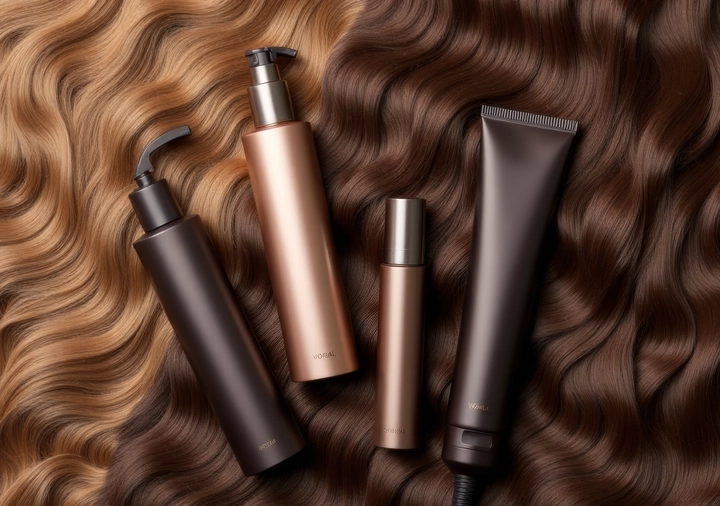
Private label shampoo manufacturing is a structured industrial process that enables brands to launch customized hair care products without investing in production facilities. It covers formulation, manufacturing, quality control, packaging, and global distribution under a regulated system.
Understanding private label shampoo manufacturing helps brand owners evaluate supplier capability, product stability, and scalability before entering the hair care market. A professional system ensures consistent quality from concept to final shipment.
Step 1: Shampoo Concept & Formulation Development
Product concept and formulation development are the foundation of any OEM shampoo manufacturer’s process. This stage defines how a brand idea is translated into a functional and market-ready formula.
The process starts with product positioning based on target users and market demand. Common directions include moisturizing care, repair, anti-dandruff, volumizing, and scalp health.
In shampoo manufacturing, formulation design involves selecting the surfactant system and active ingredients. These choices directly influence product performance, texture, and consumer experience.
Key formulation elements include:
- Surfactant systems: sulfate-based, amino acid-based, plant-derived systems
- Active ingredients: keratin, argan oil, caffeine, niacinamide
- Performance targets: foam stability, cleansing strength, scalp comfort
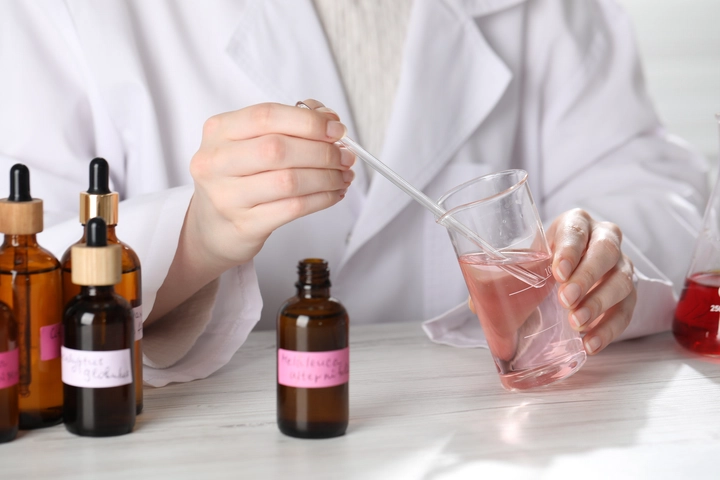
Before final approval, multiple laboratory prototypes are developed and tested. These prototypes are evaluated for texture, fragrance balance, viscosity, and stability performance.
In advanced OEM shampoo manufacturer systems, formulation optimization is an iterative process that ensures both performance and market suitability.
Step 2: Ingredient Sourcing & Water Purification System
Ingredient sourcing and water purification are critical foundations of shampoo manufacturing, directly impacting product safety and long-term stability.
Raw material selection begins with supplier qualification and verification of COA documents. Every ingredient used in shampoo manufacturing must meet purity, microbial, and safety standards before entering production.
Water is a major component in shampoo formulations, making purification systems essential. Industrial-grade water treatment ensures consistent quality across all batches.
The water purification process includes:
- Softening system for mineral removal
- Reverse osmosis for impurity filtration
- UV sterilization for microbial control
Before production, all raw materials are pre-weighed and organized into controlled batch systems. This improves production accuracy and reduces formulation deviation.
A professional shampoo manufacturer also maintains full traceability, linking every ingredient batch to the final finished goods.

Step 3: Mixing & Emulsification of Shampoo
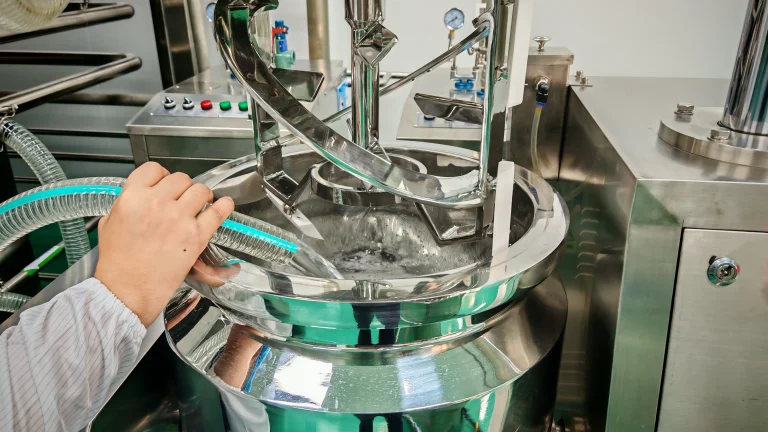
The shampoo manufacturing process is the core production stage where raw materials are transformed into a stable cosmetic system. In professional shampoo manufacturing, precision control of temperature, mixing speed, and ingredient sequencing determines final product quality.
Production begins with phase separation. Ingredients are divided into water phase, oil phase, and active phase to ensure controlled emulsification and stability.
During mixing, heating activates surfactants while mechanical stirring ensures the uniform distribution of ingredients. This process directly affects foam quality and cleansing performance.
Key process controls:
- Temperature-controlled heating system
- Speed-adjusted mechanical mixing
- Controlled ingredient addition sequence
Viscosity adjustment is a key part of shampoo private label manufacturing. It determines product texture, flow behavior, and user perception. This is achieved using salt systems, polymers, and thickening agents.
Cooling and pH adjustment follow emulsification. The final formulation is stabilized under controlled cooling conditions to ensure long-term product consistency.
A modern shampoo manufacturer uses automated systems to reduce human error and ensure batch-to-batch consistency.
Step 4: Quality Control in Shampoo Manufacturing
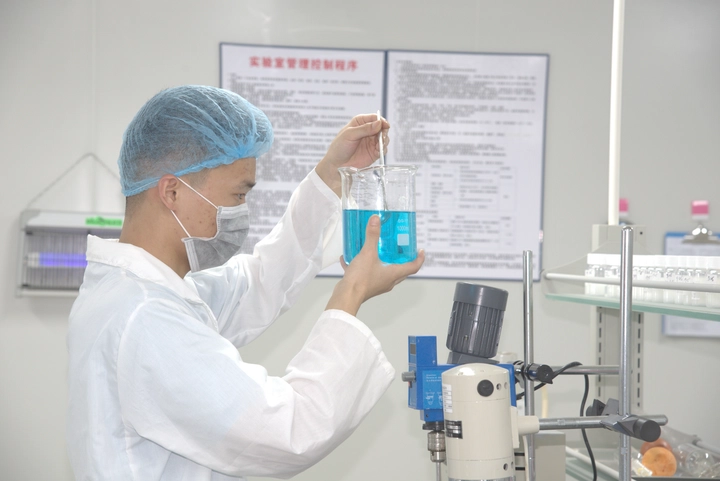
Quality control ensures that every batch of shampoo manufacturing meets safety, performance, and regulatory requirements before release.
Testing procedures include physical, chemical, and microbiological evaluations. These ensure product consistency and compliance with international cosmetic standards.
Quality control checklist:
- pH value testing
- Viscosity measurement
- Color and fragrance evaluation
- Microbial safety testing (bacteria, yeast, mold)
- Stability testing under different temperatures
Stability testing simulates real-world conditions such as heat, cold, and light exposure. This ensures that products maintain performance throughout shelf life.
Each batch in shampoo private label manufacturing is assigned a unique traceability code linked to production data and test results.
Step 5: Filling & Primary Packaging
Filling and packaging represent the transition from bulk formulation to finished commercial product in shampoo manufacturing.
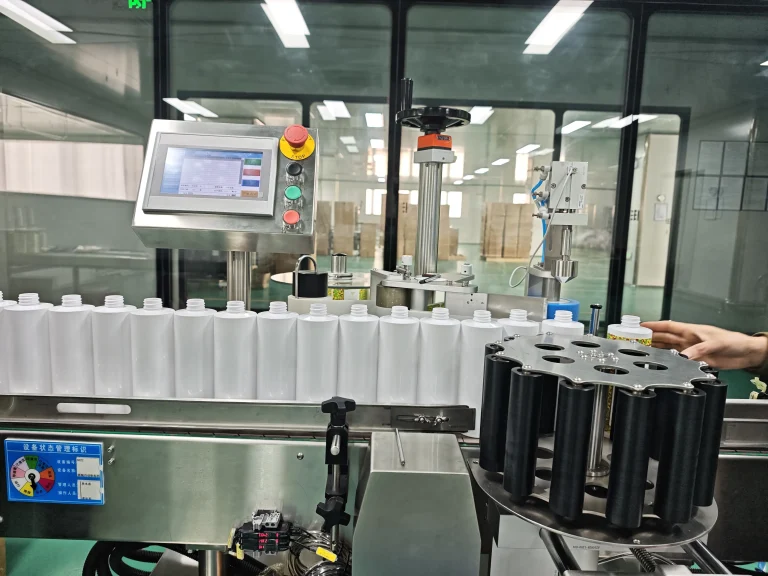
Automatic filling systems ensure accurate volume control for every unit. Machines are adjusted based on product viscosity and packaging type.
Primary packaging includes:
- PET bottles
- HDPE bottles
- PCR eco-friendly materials
- Pump and flip-top systems
Inline inspection systems ensure quality by monitoring:
- Filling weight accuracy
- Seal integrity
- Leakage prevention
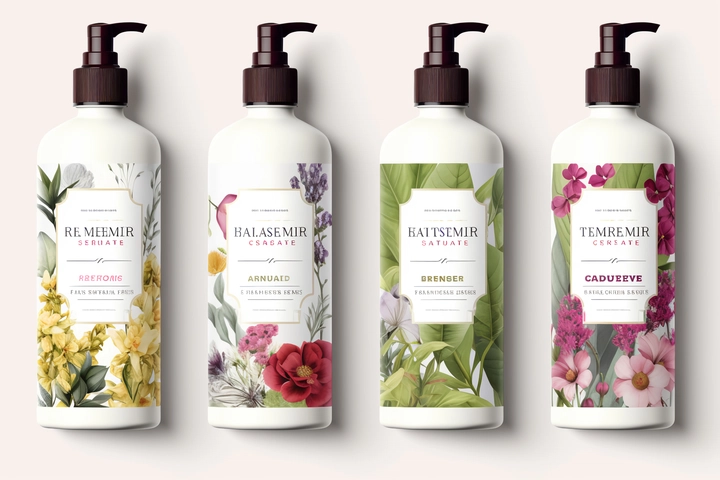
Packaging is not only functional but also a key branding element in shampoo private label manufacturing, influencing customer perception and product positioning.
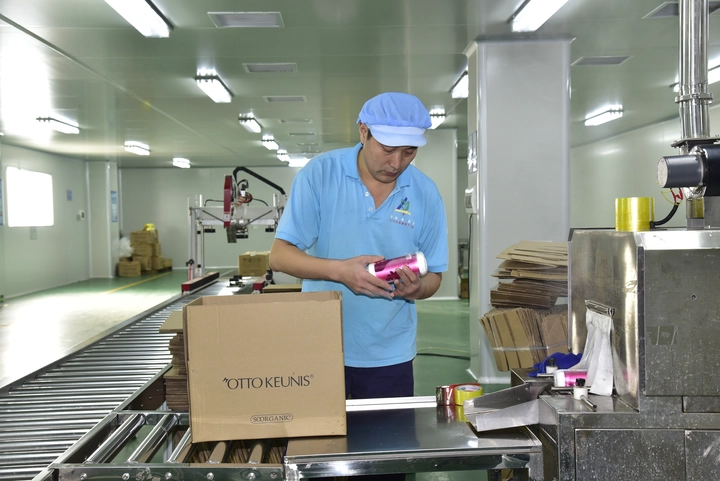
Step 6: Labeling, Coding, Cartoning & Shipping
This stage completes the shampoo manufacturing process and prepares products for global distribution.
Labels must comply with regional regulatory requirements and include ingredients, usage instructions, and safety information.
Production tracking includes:
- Batch coding and expiration date printing
- Full traceability system integration
- Regulatory-compliant labeling
Cartoning and palletizing ensure safe transportation and storage efficiency. Secondary packaging protects products during international logistics.
MOQ, Lead Time & Manufacturing Capacity
MOQ, lead time, and production capacity are essential decision factors in shampoo private label manufacturing. These directly affect brand launch strategy and scalability.
Typical structures include:
- MOQ varies by formulation complexity and packaging type
- Standard formulations usually allow lower entry volume
- Custom formulations require a higher MOQ
Production timeline includes sampling, approval, and mass production phases. Efficient shampoo manufacturing systems help brands reduce time-to-market significantly.
Key capacity considerations:
- Daily production output
- Number of filling lines
- Scalability for global orders
Why Private Label Shampoo Manufacturing Matters
Private label shampoo manufacturing has become a core model for modern hair care brands because it significantly reduces entry barriers while improving speed to market. Instead of building factories and laboratories, brands rely on professional partners to handle formulation, production, and compliance.
In the current beauty industry, shampoo private label manufacturing has evolved into a full-service ecosystem. A modern shampoo manufacturer is no longer only responsible for production, but also provides formulation development, packaging solutions, and regulatory support.
This transformation allows brands to focus on marketing and brand positioning while outsourcing technical manufacturing processes. As a result, shampoo manufacturing becomes more efficient, scalable, and cost-effective.
Key advantages include:
- Faster time-to-market for new products
- Lower R&D and infrastructure investment
- Access to proven and stable formulations
- Scalable production for global expansion
- Reduced operational and compliance risk
A professional shampoo private label manufacturing system ensures that brand owners can launch products quickly while maintaining consistent quality across markets.
Why Choose Mountain Sea Private Label
Choosing the right shampoo manufacturer directly impacts product quality, brand positioning, and long-term business success.
In advanced OEM shampoo manufacturer systems, brands gain access to established formulation libraries, reducing development time and technical risk.
Mountain Sea shampoo’s private label manufacturing system integrates formulation development, packaging design, production, and export support into a unified workflow.
Key strengths include:
- In-house R&D formulation database
- Stable large-scale production system
- International compliance support
- Flexible customization options
Start Your Private Label Shampoo Project
Starting a private label shampoo manufacturing project requires clear product positioning, target market definition, and packaging strategy.
Brand owners should define:
- Product concept and function
- Target customer segment
- Packaging and branding direction
- Regulatory requirements for target markets
Working with a professional shampoo manufacturer allows brands to focus on marketing and distribution while production is handled through a controlled industrial system.
If you are planning to launch your shampoo brand, contact us today to discuss your project. We provide full private label shampoo manufacturing services, including custom formulation development, packaging design, sample production, and large-scale manufacturing to support your brand from concept to market.