Private label haircare is still worth it for new brands in 2026, but only when it is built on strong product differentiation, reliable manufacturing support, and a realistic Amazon business strategy rather than generic white-label competition.
The opportunity is still active, but profitability is no longer driven by “easy entry” — it is driven by formulation quality, positioning, and supply chain capability.
Key Takeaways:
- In 2026, Amazon’s private label haircare remains viable, but success depends on differentiation, supply chain strength, and marketing efficiency rather than easy market entry.
- High-performing categories include sulfate-free shampoos, hair growth products, repair treatments, curl care, and scalp-focused solutions.
- Winning brands rely on clear positioning and stable, customized formulations instead of generic white-label products.
- A structured launch process is required: market validation → product definition → sampling → Amazon launch → continuous optimization.
- Haircare manufacturers play a key role in product development, customization, production stability, and compliance support.
- Total investment includes manufacturing, packaging, Amazon FBA fees, and ongoing PPC costs, making early-stage operations a capital-intensive growth phase.
Market Reality of Amazon Private Label Haircare
The market reality of private label Amazon business in the haircare category has shifted significantly over the past few years, moving from low-barrier entry to a highly competitive, advertising-driven environment. In 2026, Amazon haircare is still growing in demand, but the competitive density has increased sharply, especially in shampoo, conditioner, and scalp care segments. This means new brands can still enter, but they must understand that visibility is no longer organic by default—it is purchased through PPC, branding strength, and conversion optimization.
From a manufacturing and supply chain perspective, we observe three clear trends:
- Rising acquisition costs due to increased ad competition
- Higher consumer expectations for ingredient transparency and performance
- Shorter product life cycles caused by fast imitation
However, opportunity still exists in sub-niches such as sulfate-free formulas, scalp-focused treatments, and curl-specific care. These categories are less saturated and allow new brands to position themselves with clearer differentiation.
For new entrants, the key reality is simple: Amazon is no longer a “product launch platform,” it is a “brand validation platform.” Without strong formulation and manufacturing backing, most private label haircare brands struggle to maintain margins after launch.

What Private Haircare Products Are Most Successful on Amazon
When analyzing best haircare products on Amazon, the success pattern is not random—it is highly structured around problem-solving categories rather than generic beauty positioning. Products that perform consistently well tend to address a specific consumer pain point and deliver visible results within a short usage cycle.
The strongest-performing categories include:
- Sulfate-free shampoo systems for sensitive scalp users
- Hair growth and anti-thinning shampoos targeting hair density concerns
- Moisture repair and damage recovery products for chemically treated hair
- Curl-specific care products for textured hair markets
- Scalp detox and balancing treatments
Among these, sulfate-free and scalp care products are currently showing the highest stability in repeat purchase behavior. From a formulation standpoint, these categories require more than surface-level ingredient mixing; they demand structured active systems such as hydration lock mechanisms, botanical oil complexes, and protein reinforcement systems.

A typical high-performing SKU structure on Amazon often includes:
| Product Type | Demand Level | Competition | Differentiation Difficulty |
|---|---|---|---|
| Sulfate-free shampoo | High | High | Medium |
| Hair growth shampoo | High | High | High |
| Curl care system | Growing | Medium | Medium |
| Scalp treatment | Growing | Medium | Medium |
The key insight is that successful Amazon haircare brands do not win by product type alone—they win by formula clarity + positioning precision + consistent supply quality, which directly connects to manufacturing capability.
What Makes a Successful Amazon Private Label Haircare Brand
From a haircare manufacturer’s perspective, the success of an Amazon private label brand is determined far more by system design than by branding aesthetics. Many new brands mistakenly focus on packaging and listing design while underestimating the importance of formulation architecture and production stability.
A successful brand typically includes three structural pillars:
- Formulation differentiation: Not a standard base formula with minor adjustments, but a purpose-driven system, such as repair, hydration, or scalp balance systems
- Consistency in production quality: Every batch must maintain identical viscosity, fragrance stability, and performance results
- Scalable supply chain readiness: Ability to scale from test batches to commercial production without reformulation risk
Mountain Sea Cosmetics also observes that successful brands usually invest early in customization rather than relying on off-the-shelf private label solutions. This includes adjusting active ingredient ratios, developing signature scent profiles, and optimizing texture for user experience.
Another critical factor is positioning alignment. Many failures occur when brands choose a “generic shampoo” strategy without defining whether they are targeting hair loss, curl care, or repair positioning. Without this clarity, even high-quality manufacturing cannot compensate for weak market fit.
In short, the haircare manufacturer’s role is not only production—it is translating market demand into a stable, scalable product system that can survive Amazon’s competitive pressure.

How to Start Amazon Private Label Amazon Business
Starting a private label Amazon business in the haircare category requires a structured, step-by-step approach that combines product strategy, supplier selection, and market validation. Unlike earlier market cycles, modern Amazon entry is not linear—it is iterative and testing-driven.
A practical launch framework includes:
- Market validation
Identify 1–2 core product categories such as hair growth, moisture repair, or scalp care. Validate demand using Amazon keyword trends and competitor analysis. - Product selection and formulation planning
Instead of selecting a finished product, define a functional direction first. For example, “sulfate-free repair shampoo system” or “curl hydration shampoo + conditioner set.” - Manufacturer collaboration
Work with a haircare manufacturer capable of OEM/ODM customization, not just white-label production. This step defines long-term brand survivability. - Sample testing and iteration
Evaluate viscosity, foaming performance, scent retention, and user feedback before finalizing the formula. - Brand positioning and Amazon listing strategy
Focus on problem-solution messaging rather than ingredient listing alone. - Launch and optimization cycle
Initial launch should be treated as data collection rather than final product validation.
A key mistake many new brands make is treating Amazon as a “launch and wait” channel. In reality, successful private label brands operate in continuous optimization cycles in which products and listings evolve together based on customer feedback.

What a Haircare Manufacturer Can Do for Your Brand
A professional haircare manufacturer plays a central role in determining whether a private label brand can compete effectively on Amazon. Their contribution goes far beyond production—it directly influences product performance, brand differentiation, and scalability.
Core manufacturing capabilities include:
- Offer a comprehensive library of formulas for you to choose from.
- Custom formulation development tailored to specific hair concerns
- Ingredient system design, such as botanical oil blends or protein repair systems
- Stability and safety testing for international compliance (US/EU markets)
- Packaging customization to improve shelf appeal and brand recognition
- Small-batch to large-scale production scalability
In addition, experienced private haircare manufacturers help brands avoid critical early-stage mistakes, such as over-formulated products that reduce stability, or under-differentiated formulas that fail to compete in Amazon’s saturated environment.
A strong hair care product manufacturing partner also supports iteration. For example, if a shampoo performs well in testing but lacks conditioning effect, formulation adjustments can be made without rebuilding the entire product line.
From a strategic standpoint, manufacturers act as a “product risk buffer.” They reduce the probability of launch failure by ensuring the product is technically stable before it enters a highly competitive marketplace like Amazon.
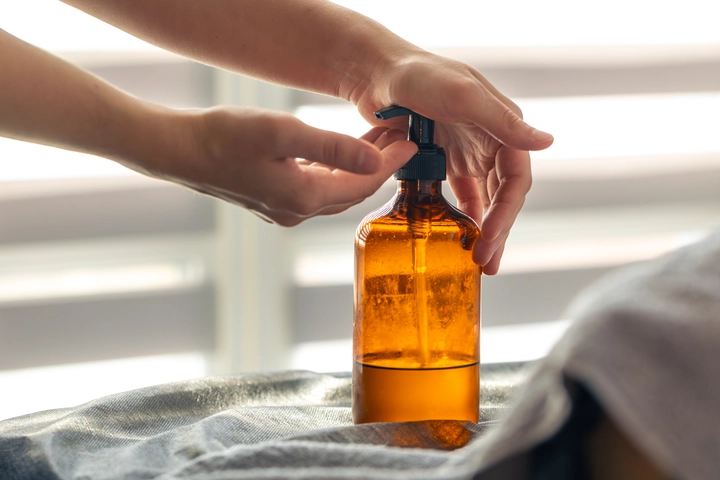
If you would like to find out more about hair care manufacturers, please read:
What Can a Hair Care Manufacturer Really Do for Your Brand?
How to Choose the Right Hair Care Manufacturer
Cost & Investment Breakdown for New Brands
Understanding the cost structure is essential before entering the private label haircare market. Many new brands underestimate the total investment required, focusing only on product unit cost while ignoring hidden operational expenses.
A typical breakdown includes:
- Product manufacturing cost (OEM unit cost)
Varies based on formulation complexity, active ingredients, and order volume. - Packaging and branding cost
Bottles, labels, boxes, and design customization significantly affect final positioning. - Amazon operational costs
FBA fees, storage, and fulfillment charges. - Marketing and PPC budget
One of the largest ongoing expenses in competitive categories. - Sampling and product development cost
Often underestimated but critical for formulation optimization.
For a private label shampoo launch, the real investment structure is not linear—it scales with competition intensity. In high-competition categories like hair growth shampoo, advertising costs can exceed manufacturing costs in the first 3–6 months.
A realistic expectation for new brands is that profitability is delayed until product-market fit is established. Early-stage operations should be treated as “an investment in data acquisition,” not immediate profit generation.
If you’d like to explore this topic further, you can view: How Much Does It Cost to Start a Hair Care Line?
Conclusion
Private label haircare remains worth pursuing in 2026, but only under a disciplined execution model that prioritizes formulation quality, manufacturer capability, and Amazon-specific strategy execution. The market is no longer suitable for generic product replication or low-differentiation private label approaches.
Success depends on three non-negotiable conditions:
- A clearly defined product positioning strategy
- A capable haircare manufacturer supporting customization and stability
- A realistic understanding of Amazon’s cost and competition structure
Brands that treat private label haircare as a “brand-building exercise” rather than a quick-entry business model still have strong opportunities, especially in sub-categories such as scalp care, curl care, and targeted repair systems.
Those who rely on generic shampoo formulas and expect immediate profitability will face increasing difficulty in sustaining performance.