Navigating the global hair care market requires recognizing that consumer loyalty is highest where individual needs are most specific. For indie and niche beauty brands, few categories offer as much repeating business and passionate community engagement as textured hair care.
Developing a high-performance curl cream represents one of the most profitable strategic moves an emerging brand can make today. However, success does not rely on reinventing foundational cosmetic chemistry from scratch. Instead, it lies in identifying the right market entry strategy, focusing on specific hair textures, and partnering with an experienced curly hair products manufacturer.
This guide breaks down the operational, chemical, and structural insights required to launch a competitive, market-ready product using a private label curl cream business model.
1. The Strategic Shift: Why Niche Brands are Prioritizing Textured Hair Care
Historically, mainstream beauty conglomerates treated textured hair as an afterthought, grouping highly diverse hair patterns into a single “ethnic care” aisle or using generalized, heavy-silicone formulas. In reality, hair textures ranging from loose loops to tight coils require completely distinct structural and hydration support. This historic gap has created a significant opportunity for agile, niche brands to capture market share through precise, texture-specific solutions.
From a business operations perspective, the textured hair demographic exhibits exceptional commercial value:
- Unmatched Brand Loyalty: Consumers with wavy, curly, or coily patterns endure extensive trial-and-error periods to find products that manage frizz without weighing down their hair. Once an effective formula is found, customer retention rates far exceed those of the straight hair care segment.
- Higher Product Consumption: Managing curl definitions requires multi-step routines. A single consumer frequently layers leave-in conditioners, defining creams, and sealing gels, resulting in rapid product depletion and a shortened repurchasing cycle.
- Premium Pricing Margins: Because curl care is viewed as functional and highly specialized rather than generic, buyers are consistently willing to pay a premium for clean, high-performance formulations that actively improve hair health.

2. Custom Formulation Mechanics: Key Ingredients and Texture Matching
A truly professional product must balance intense hydration with reliable style retention. When collaborating with a hair care manufacturer to build your inventory, your technical brief should focus on a clean beauty framework that eliminates harsh sulfates, drying alcohols, and heavy, non-soluble silicones. Modern consumers demand ingredients that feed the hair cuticle while delivering flawless styling results.
The Base Hydration Matrix
Because sebum struggles to travel down the twists of a curved hair shaft, curly hair is naturally prone to dryness and breakage. An excellent formulation uses a sophisticated lipid matrix to mimic or replenish this natural moisture barrier. Key active ingredients include:
- Shea Butter & Avocado Oil: Rich in fatty acids that penetrate the hair shaft to restore elasticity and soften coarse textures.
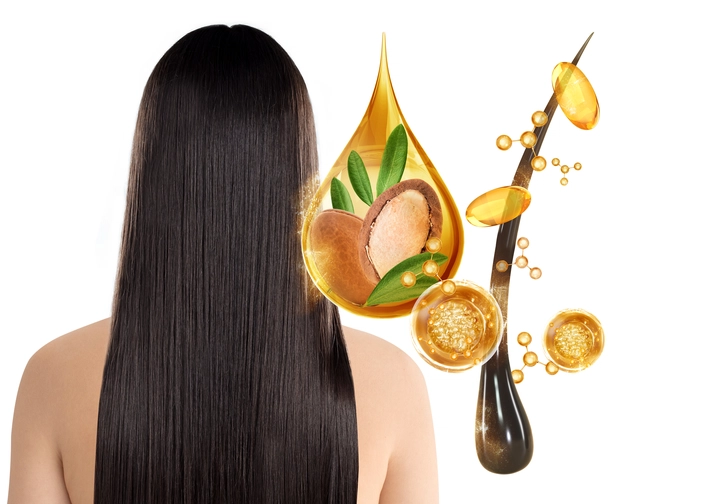
- Argan Oil & Jojoba Esters: Provide a protective, lightweight surface seal that mimics natural sebum, delivering brilliant shine without a greasy residue.
Structure, Memory, and Definition
Hydration alone cannot prevent frizz in humid environments. To maintain shape, the formula must incorporate natural polymer networks and proteins that support the hair’s structural integrity:
- Hydrolyzed Rice or Wheat Proteins: These micro-proteins attach to gaps in the damaged hair cuticle, temporarily strengthening the hair structure and enhancing natural curl memory.
- Natural Flaxseed or Chia Seed Extracts: Act as clean, film-forming agents that provide a flexible, touchable hold—eliminating the crunchy, stiff texture associated with low-quality styling gels.
Formulating Across the Texture Spectrum
A single product cannot effectively serve all curl patterns. Your private label curl cream must explicitly define its target demographic along the texture spectrum:
| Target Hair Category | Formulation Requirements | Product Texture & Viscosity |
| Type 2A – 2C: Loose Waves | Requires ultra-lightweight hydration. Heavy oils must be minimized to avoid flattening natural volume. Perfect for brands launching a dedicated curl cream for wavy hair. | Fluid, milky lotion or lightweight aerated cream base. |
| Type 3A – 3C: Defined Curls | Requires a balanced blend of moisture and flexible polymer hold to maximize bounce, control frizz, and define individual ringlets. | Medium-bodied cream with smooth slip and immediate absorption. |
| Type 4A – 4C: Coily & Kinky Textures | Demands maximum lipid density. Formulas require heavy concentrations of plant butters to lock in moisture, prevent severe shrinkage, and protect fragile coils from breakage. | Rich, dense butter or highly viscous styling cream. |
3. Market Entry Strategy: Pre-Formulated vs. Custom Manufacturing
When launching your brand, choosing how to source your formula is a critical operational decision. You must balance time-to-market and initial capital investment against your long-term product differentiation goals. Most professional brands select one of two primary supply chain paths:
- Path A: Sourcing a Turnkey Private Label Formula
- The Mechanism: Choosing an existing, rigorously tested formula from your manufacturer’s library and applying your own custom branding and packaging.
- Operational Advantages: * Rapid Market Entry: Eliminates months of laboratory development and stability testing, allowing you to launch within weeks.
- Low MOQs: Reduces initial inventory costs, making it ideal for testing a niche market with minimal financial risk.
- Guaranteed Compliance: The formula is already fully vetted for global regulatory safety standards.
- Path B: Engaging in Custom Contract Manufacturing
- The Mechanism: Collaborating directly with an in-house R&D laboratory to develop an entirely exclusive formulation from the ground up.
- Operational Advantages:
- Absolute Market Differentiation: Allows you to market highly proprietary ingredient blends or distinct aromatherapeutic scent profiles.
- Tailored Clean Standards: Enables strict adherence to specific retailer checklists (e.g., Sephora Clean, Target Clean standards).
- Scalable Valuation: Owning a proprietary chemical formula builds tangible intellectual property asset value for your business.
Strategic Advisory Note for Indie Brands: If you are entering the competitive ecommerce or landscape for the first time, starting with an established, high-tier wholesale curl defining cream formula is often the most stable path. This limits capital exposure, allowing you to focus budget and resources on community building, brand identity, and customer acquisition. Once consistent sales velocity is proven, you can seamlessly scale into custom modifications.
4. Step-by-Step Execution: Bringing Your Curl Product to Market
To successfully execute a commercial product launch without regulatory delays or supply chain issues, your operational roadmap should follow these four foundational phases:
Phase 1 & 2: Strategy & Sourcing
| Step 1: Define Target Audience | Step 2: Vet Your Manufacturer |
| Action: Narrow down your specific niche (e.g., lightweight curl cream for wavy hair vs. heavy butters for tight, protective styles). | Action: Partner with a certified, experienced curly hair products manufacturer. |
| Impact: Your specific audience directly dictates your final ingredient selection and packaging functionality. | Impact: Ensure their facility operates under cGMP and ISO 22716 standards to handle complex botanical emulsions. |
Phase 3 & 4: Testing & Delivery
| Step 3: Rigorous Compliance Testing | Step 4: Optimize Functional Packaging |
| Action: Never skip essential laboratory and safety evaluations to rush your time-to-market. | Action: Prioritize practical dispensing over pure aesthetics. |
| Impact: Complete strict stability testing (to prevent cream separation) and microbiological safety checks. | Impact: Select high-barrier tubes or heavy-duty pumps capable of dispensing thick, viscous |
Ready to Scale Your Textured Hair Care Brand?
Building a successful niche beauty brand requires turning complex formulation science into seamless, scalable market execution. By utilizing a high-performance private label curl cream base backed by professional manufacturing, you can deliver the premium results your customers demand while maintaining healthy profit margins.
Whether you need a flexible, low-MOQ turnkey solution or custom cosmetic laboratory development, our team provides the manufacturing expertise, regulatory support, and production quality required to bring your vision to life.
Contact our project management team today to request a comprehensive catalog and order your initial bench samples.