The best private label hair products for a new brand are usually 2–4 complementary products that address a clear customer need and support a focused brand position. Shampoo, conditioner, hair masks, hair oils, serums, and leave-in treatments can all be strong starting options, but the right mix depends on the target customer, budget, and long-term product strategy.
What Makes a Good First Product for a New Hair Care Brand?
Choosing the first private label hair products requires more than looking at which products are popular. A product may have strong market demand but still be a poor choice for a new brand if it is difficult to differentiate, expensive to develop, or disconnected from the brand’s target customer.
A strong first product should meet several practical criteria.
Clear Consumer Need
New brands generally benefit from products that address a problem customers already understand. Hydration, hair repair, scalp care, frizz control, color protection, and curl definition are easier to communicate than an unfamiliar product concept that requires extensive consumer education.
A clear need also makes marketing easier. The brand can build its messaging around the customer’s concern rather than explaining what the product is supposed to do.
Simple and Focused Positioning
A first product should fit into a clear brand concept.
For example, a brand focused on damaged hair could begin with a repair shampoo or treatment mask, while a premium everyday hair care brand might focus on a shampoo and conditioner system.
The goal is not to create a product that appeals to everyone. It is to create a product that makes sense for the specific customer the brand wants to attract.
Repeat-Purchase Potential
Hair care is often a replenishment category. Products such as shampoo, conditioner, and regular treatments can generate repeat purchases when customers are satisfied with the results.
This makes repeat-purchase potential an important consideration for a new brand. A product that customers buy once but rarely use again may require more aggressive customer acquisition to maintain sales.
Potential for Product-Line Expansion
A first product should ideally create opportunities for future products.
For example:
- Shampoo can lead to conditioner and hair masks.
- A scalp shampoo can lead to scalp treatments.
- A curl-focused shampoo can lead to conditioner and curl cream.
- A hair oil can be expanded into a broader repair or finishing collection.
This makes the first product more than an individual SKU. It becomes the starting point for a broader product strategy.
Manageable Launch Requirements
New brands also need to consider formulation, packaging, MOQ, inventory, and production costs.
A product may look attractive from a marketing perspective but become difficult to launch if the minimum order quantity is too high or the packaging is unnecessarily complex.
For a first launch, the strongest product is often the one that balances consumer demand, brand positioning, differentiation, and practical production requirements.
Which Private Label Hair Products Have the Most Potential for a First Launch?
Several private label hair care products can work well for a new brand, but they do not all play the same role. Instead of asking which product is universally the best, consider what each product can contribute to the brand’s initial offering.
Shampoo
Shampoo is one of the most practical starting points because consumers already understand the category and use it regularly.
A brand can develop a shampoo around a specific need, such as:
- Moisture and hydration
- Damaged hair repair
- Color protection
- Scalp care
- Volume and thickening
- Gentle daily cleansing
- Sulfate-free care
Its biggest advantage is versatility. A shampoo can serve as the foundation of a product line and provide a clear entry point for customers.
The challenge is competition. Because shampoo is a familiar category, a new brand needs a clear reason for customers to choose its product over established alternatives.
Conditioner
Conditioner can be particularly effective when paired with shampoo rather than launched as an isolated product.
A shampoo-and-conditioner combination gives customers a simple routine and allows the brand to communicate a complete hair care solution.
For example, a repair-focused brand could develop a repairing shampoo and conditioner around damaged or chemically treated hair. A moisturizing brand could build the pair around dry, coarse, or frizzy hair.
This also creates opportunities for cross-selling and repeat purchases.
Hair Mask
A hair mask can play the role of a more intensive treatment product within a new product range.
Hair masks are particularly suitable for concepts focused on:
- Hair repair
- Deep hydration
- Bleached or chemically treated hair
- Frizz management
- Strengthening and nourishment
Compared with a basic shampoo, a mask can provide stronger treatment-oriented positioning. It can also support a premium product strategy when the formula, packaging, and product experience are designed accordingly.
The main consideration is usage frequency. Hair masks are typically used less often than shampoo, so they may work better as part of a product system than as the only launch product.
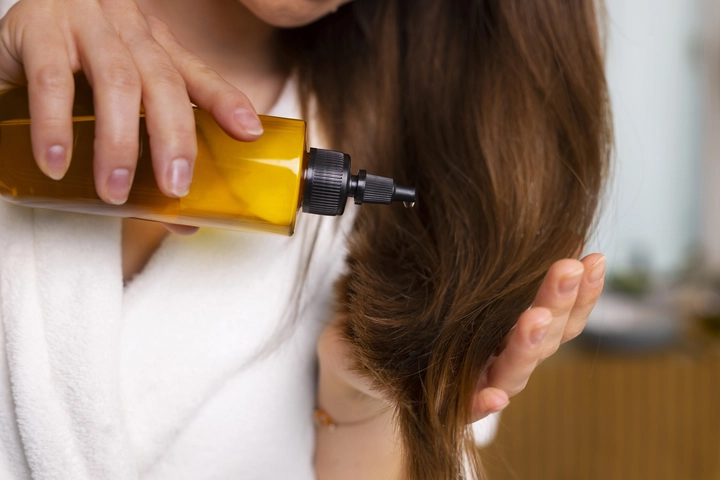
Hair Oil and Serum
Hair oils and serums can be useful for brands that want a more premium or targeted positioning.
Depending on the formulation, they can focus on:
- Shine
- Smoothness
- Frizz control
- Dryness
- Hair protection
- Finishing and styling
- Nourishment
They can also be easier to position as specialized treatment products rather than basic cleansing products.
However, this category is highly competitive. A new brand should have a clear concept rather than launching another generic hair oil with little differentiation.
Leave-In Treatments
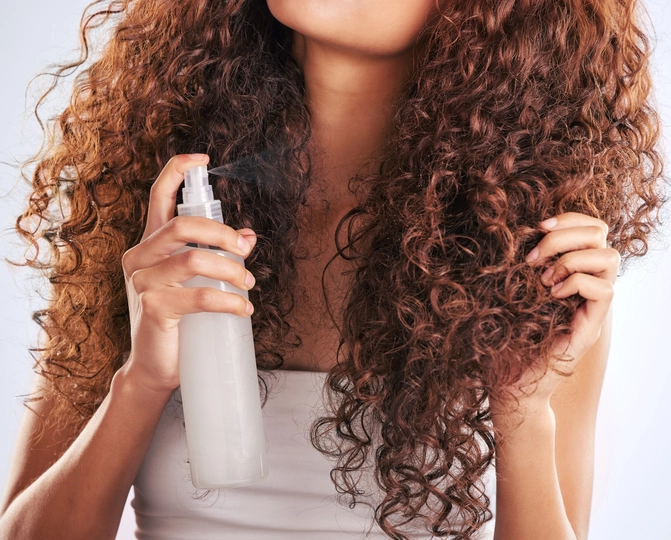
Leave-in treatments offer another opportunity for brands that want to build a daily hair care routine.
Possible concepts include leave-in conditioners, repair treatments, detangling products, anti-frizz products, and heat-protection treatments.
Their advantage is that they extend the hair care routine beyond washing. This can help a brand create a more complete product system and increase opportunities for customers to purchase multiple products.
Styling Products
Styling products can be a strong first choice when the brand has a clearly defined styling audience.
Examples include:
- Curl creams
- Styling creams
- Hair wax
- Hair sprays
- Smoothing products
However, styling products are often more dependent on a specific hair type, styling routine, or customer segment. They may therefore be better suited to a niche brand than a general-purpose hair care line.
How Should a New Brand Build Its First Product Line?
A private label hair product line should be built around a clear customer need rather than a long list of unrelated products. Once a brand has identified its core product opportunity, the next step is to determine which products naturally work together.
A good starting product line should feel like a complete solution, even if it contains only a few SKUs.
Everyday Hair Care Line
A simple everyday line could include:
Shampoo + Conditioner
This combination is easy for consumers to understand. It can work for brands targeting general hair care, hydration, gentle cleansing, or daily maintenance.
The advantage is simplicity. Both products serve a familiar role and can be marketed together as a basic routine.
Repair-Focused Hair Care Line
A repair-oriented brand could start with:
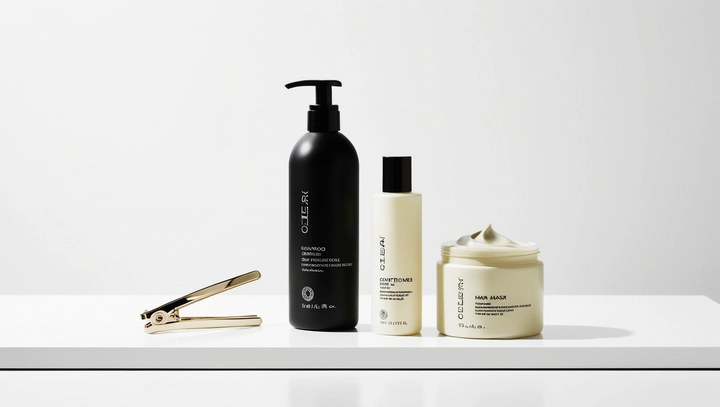
Repair Shampoo + Conditioner + Hair Mask
This structure gives each product a distinct role.
The shampoo cleanses, the conditioner provides regular conditioning, and the mask offers more intensive treatment.
This type of product line can be positioned around damaged, dry, bleached, or chemically treated hair.
Premium Hair Treatment Line
A premium concept could combine:
Shampoo + Hair Mask + Hair Oil
Here, the hair oil can function as a finishing or treatment product, while the shampoo and mask establish the core routine.
The brand can create a stronger premium identity through formulation, fragrance, texture, packaging, and overall product experience.
Scalp Care Line
A scalp-focused brand could consider:
Scalp Shampoo + Scalp Treatment
This approach is more targeted than a general hair care range. It allows the brand to build its identity around scalp-related concerns rather than trying to address every hair problem.
Curly Hair Care Line
A curl-focused range could include:
Curl Shampoo + Conditioner + Curl Cream
This combination follows the customer’s routine from cleansing to conditioning and styling.
It also demonstrates an important principle: the strongest starter product line is often based on product compatibility, not simply a list of individually popular products.
How Should Product Positioning Influence Your First Launch?
The right first products depend heavily on hair care brand positioning. Two new brands can target the same overall market but require completely different product lines because they serve different customers or solve different problems.
A brand should therefore define its target customer before finalizing its first products.
Everyday Hair Care
An everyday hair care brand may prioritize products with broad appeal, such as shampoo and conditioner.
The positioning can focus on simple routines, regular use, hydration, gentle cleansing, or healthy-looking hair.
Repair and Damaged Hair
A brand targeting damaged hair has a stronger reason to build its range around treatment.
A repair shampoo, conditioner, and hair mask may make more sense than a general-purpose shampoo and styling product.
The product selection should reinforce the central promise of helping customers care for dry, damaged, bleached, or chemically treated hair.
Scalp Care
Scalp care requires a more targeted product strategy.
Instead of adding scalp-related claims to a general hair care range, a brand may build its identity around scalp cleansing and treatment.
This can create a clearer niche and make it easier for customers to understand what the brand specializes in.
Curly Hair Care
Curly hair brands can develop products around the needs of specific curl patterns and styling routines.
A shampoo, conditioner, and curl cream can create a more coherent product system than launching unrelated products for different hair concerns.
Men’s Hair Care
A men’s hair care brand may combine cleansing and styling products according to how its target customers use their hair.
For example, shampoo combined with a styling product may make more sense for a men’s grooming brand than starting with an extensive treatment collection.
Premium Hair Care
Premium positioning requires more than higher pricing.
The formulation, fragrance, texture, packaging, product claims, and overall customer experience need to support the desired price point.
This is why product positioning should influence product selection from the beginning rather than being added after the products have already been chosen.
What Should New Brands Consider Before Ordering Private Label Hair Products?
Private label hair products for new brands should be evaluated from both a market and production perspective. Choosing a promising concept is only the first step; the brand also needs to determine whether the product can be developed and produced within its available budget and timeline.
Formula and Product Performance
The formula needs to match the intended positioning and customer expectations.
Consider factors such as:
- Product texture
- Fragrance
- Ingredient direction
- Hair type
- Intended product benefits
- Packaging compatibility
- Product stability
Samples are particularly useful because a product that looks attractive on paper may perform differently in actual use.
MOQ and Initial Inventory
MOQ can have a major impact on a new brand’s launch strategy.
The minimum order may vary depending on the product, formula, packaging, customization requirements, and manufacturing process. A brand should calculate not only the cost per unit but also the total initial inventory investment.
Starting with fewer complementary products can make inventory management easier and reduce the risk of committing too much capital before the market has been tested.
Packaging and Product Presentation
Packaging is part of the product positioning.
A premium treatment line may require different packaging from a minimalist everyday hair care brand. At the same time, unnecessarily complex packaging can increase costs and complicate production.
New brands should consider the relationship between:
Formula → Packaging → Retail Price → Brand Positioning
rather than making each decision separately.
Customization Requirements
Some brands may only need a label and packaging change, while others may want adjustments to fragrance, texture, formula, color, or product performance.
The more customization a product requires, the more development work may be involved.
A brand should therefore define which elements truly need customization before beginning product development.
Samples and Product Testing
Samples provide an opportunity to evaluate the product before committing to a larger production run.
Brands should review the formula, packaging, fragrance, texture, appearance, and overall user experience.
This stage is especially important for first-time founders who may still be refining their product concept.

Stock Formula or Custom Formulation: Which Is Better for a New Brand?
Private label hair product formulation can range from ready-made formulas with limited customization to fully customized products developed around a specific brand concept. Neither approach is automatically better; the right option depends on how much differentiation the new brand needs and how quickly it wants to launch.
Stock or Ready-Made Formula
A ready-made formula can be practical when the brand wants to enter the market quickly.
Potential advantages include:
- Faster product development
- Lower development complexity
- Easier initial product selection
- More straightforward launch planning
This approach can work particularly well when the brand’s primary differentiation comes from positioning, packaging, branding, or a clearly defined target market.
For example, a new brand may select an existing moisturizing shampoo formula and build a distinct visual identity and market position around it.
Custom Formulation
Custom formulation provides greater control over the product itself.
It may be more appropriate when the brand has a specific concept, ingredient direction, texture, fragrance, or performance requirement that cannot be achieved through a standard formula.
Custom development can help a brand create a stronger point of differentiation, particularly when the product itself is intended to become the brand’s signature offering.
However, custom development generally requires more time, testing, and development work.
How Should a New Brand Decide?
Consider three questions:
- How unique does the product need to be?
- How quickly does the brand need to launch?
- How much development budget is available?
A new brand testing an initial concept may benefit from a simpler formula development approach, while a brand built around a highly specific product concept may justify investing in custom formulation from the beginning.
How Many Products Should a New Hair Care Brand Launch?
For most new brands, launching 2–4 complementary products is a practical starting point. The right number ultimately depends on the business model, budget, target market, and complexity of the product line, but a focused launch is often easier to manage than a large catalog.
Starting With 1–2 Products
A very small launch can make sense when the primary goal is market testing.
For example, a brand may begin with one hero shampoo and one complementary conditioner.
The advantages include:
- Lower initial inventory
- Simpler marketing
- Easier product testing
- More focused brand messaging
The limitation is that a very small range provides fewer opportunities for cross-selling.
Starting With 2–4 Products
This is often a balanced approach for a new hair care brand.
A small product range can provide enough variety to create a complete routine while keeping product development, inventory, and marketing manageable.
For example:
Shampoo + Conditioner + Hair Mask
creates a clear repair routine without requiring a large catalog.
Launching 5 or More Products
A larger launch can make sense when the brand has sufficient capital, a well-defined market, and a strong marketing strategy.
However, more SKUs mean more decisions around:
- Formula development
- Packaging
- Inventory
- Product photography
- Marketing content
- Samples
- Forecasting
- Production planning
For a new business without established sales data, launching too many products can make it harder to determine which products are actually driving demand.
Expand Based on Market Feedback
A starter range does not need to remain small forever.
Once the brand has customer feedback and sales data, it can add products that complement its strongest-performing categories.
This creates a more controlled growth path:
Launch → Test → Learn → Expand
Rather than:
Develop a large range → Hold inventory → Try to sell everything
For new brands, this approach can reduce unnecessary risk while allowing the product line to develop around actual customer demand.
Conclusion
The best private label hair products for a new brand are not necessarily the most popular products on the market. They are the products that fit the brand’s target customer, market positioning, budget, and long-term product strategy.
For most new brands, starting with 2–4 complementary products can provide a practical balance between product variety and manageable inventory. The goal is to create a focused product line with a clear purpose, then expand it as customer demand and market feedback become clearer.
If you are planning to launch a private label hair care brand, Mountain Sea can help you select suitable products, develop formulas, customize packaging, and build a focused product line around your brand concept.