Most hair care product concepts can be manufactured, but moving from an initial idea to commercial production requires more than confirming that a formula can be made in a laboratory. Formula feasibility, ingredient availability, product format, packaging compatibility, testing requirements, and production scale all affect whether a concept is commercially viable.
For hair care brands, the key question is not simply whether a product can be made, but whether it can be developed into a stable, repeatable, and production-ready product that meets the intended performance and market requirements.
Not Every Hair Care Product Concept Is Ready for Manufacturing
A product concept is a starting point, not yet a manufacturing specification. The concept may define the desired product type, performance, ingredients, texture, packaging, or target market. However, these elements still need to be translated into requirements that can be developed and produced consistently.
For example, a brand may have a clear idea for a shampoo with a particular cleansing profile, texture, fragrance, packaging format, and ingredient story. Each element may be achievable individually, but you still need to evaluate the combination as one product.
The gap between a concept and a production-ready product usually comes from four areas:
- Performance: Can the formula deliver the intended product experience?
- Technical feasibility: Can the ingredients and formula work together within the required product format?
- Manufacturing feasibility: Can the formula be produced consistently at commercial scale?
- Commercial requirements: Can the product meet packaging, cost, quantity, timeline, and market requirements?
This is why a product concept should be evaluated before packaging is finalized or a large production order is placed.

What Determines Hair Care Product Manufacturing Feasibility?
Hair Care Product Manufacturing feasibility depends on how well the product concept, formula, raw materials, packaging, production process, and commercial requirements work together. A product may be technically possible but still require changes before it becomes practical for commercial production.
Formula and Ingredient Requirements
The formula needs to support the intended performance while remaining stable and suitable for the selected manufacturing process. Ingredient compatibility, raw material specifications, supply availability, and processing conditions can all affect the final formula.
An ingredient may work well in a laboratory sample but create challenges when its required concentration, sourcing conditions, processing requirements, or supply consistency are considered at commercial scale.
Product Format and Processing
Different product formats place different demands on manufacturing.
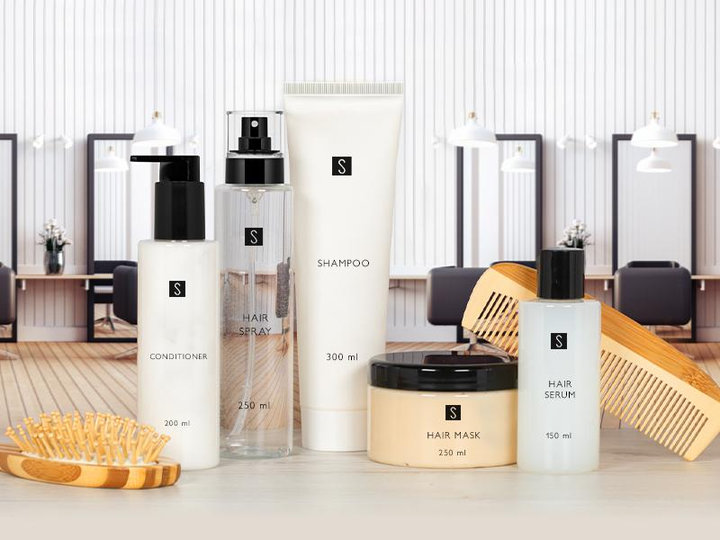
Shampoos, conditioners, masks, oils, serums, sprays, and styling products may require different mixing, heating, filling, or dispensing processes. The desired viscosity and texture can also influence production and filling requirements.
A concept should therefore be evaluated together with its intended format rather than treating formulation and manufacturing as completely separate stages.
Packaging Compatibility
Packaging is another practical constraint. The formula, container material, closure, pump, spray mechanism, and dispensing system need to work together.
This is particularly important when a product has a specific viscosity, contains a high proportion of oils, or requires a particular dispensing format. Packaging that looks suitable from a branding perspective may still require technical evaluation before final approval.
Commercial Requirements
Manufacturing decisions are also affected by:
- Target production quantity
- MOQ requirements
- Raw material and packaging availability
- Target cost
- Production lead time
- Required documentation
- Destination-market requirements
A product can therefore be technically manufacturable without being the most practical solution for a particular commercial project.
Can the Formula Be Developed for Commercial Production?
Hair Care Product Formulation needs to be evaluated for both product performance and production feasibility. A formula that performs well in a laboratory sample may still need optimization before it can be transferred to commercial manufacturing.
The development process typically considers several connected requirements.
Performance Requirements
The formula first needs to deliver the intended characteristics, such as cleansing, conditioning, moisturizing, smoothing, hold, shine, or other defined performance targets.
These requirements should be specific enough to guide development. Vague performance expectations make it more difficult to determine whether a sample is ready for further testing or requires another development round.
Ingredient Compatibility
Ingredients do not function independently. Their concentrations, interactions, processing conditions, and compatibility with the overall system can affect stability and performance.
For custom projects, Custom Hair Care Formulation may therefore involve more than adding a requested ingredient. The formulation may need to be adjusted around the ingredient to maintain the desired texture, stability, performance, and production characteristics.
Raw Material Availability
Commercial formulation also requires consideration of supply.
A formula dependent on a difficult-to-source material, inconsistent specification, or long procurement cycle may create problems later even if the laboratory sample performs well.
For this reason, Formula Development should consider commercial sourcing rather than treating the laboratory formula as the final specification from the beginning.
Scale-Up Feasibility
Scale-up is another important distinction between development and manufacturing.
Mixing speed, batch size, processing temperature, addition sequence, homogenization, viscosity, and filling behavior can behave differently as production volume increases. The objective is not simply to reproduce the laboratory sample at a larger volume, but to establish a process that can deliver consistent results.
This is one reason formula approval should occur alongside production planning rather than being treated as an isolated laboratory decision.
Sample Testing and Product Validation
Sample testing determines whether the developed product actually meets the requirements established during the development stage. It is the point where a proposed formula moves from theoretical feasibility toward verified product performance.
A typical development sequence may include:
Laboratory Sample → Evaluation → Optimization → Testing → Formula Approval → Production Scale-Up
Sample Evaluation
The first sample provides a practical basis for reviewing:
- Texture and appearance
- Fragrance profile
- Application and sensory characteristics
- Product performance
- Packaging and dispensing behavior
Feedback at this stage should be specific. If the texture, fragrance, performance, or application experience is not aligned with the product brief, the development team can identify what needs to change.
Stability and Performance Testing
Product Stability Testing helps determine whether the product remains within the required specifications under defined conditions.
Testing requirements vary according to the product, formula, packaging, intended market, and project specifications. Stability is therefore not simply a final formality; it provides information about whether the selected formulation and packaging combination is suitable for commercialization.
Packaging Compatibility
Packaging Compatibility should also be evaluated before final production approval.
The objective is to confirm that the formula and packaging function together as intended. This can include checking dispensing performance, container integrity, interaction with the formula, and suitability of the selected closure or pump.
Formula Approval
Once the required evaluations have been completed and necessary adjustments made, the approved formula and product specifications become the reference point for production.
This creates an important transition: future manufacturing batches need to reproduce the approved product consistently rather than simply recreating an approximate laboratory sample.
What If the Original Product Concept Needs to Be Adjusted?
Not every product concept needs to be changed, but adjustments are common when technical or commercial requirements conflict. In many cases, the most effective approach is to preserve the core product objective while modifying the elements that create manufacturing constraints.
For example, adjustments may involve:
| Original Requirement | Possible Development Adjustment |
|---|---|
| Specific texture | Modify the formulation system or viscosity |
| Difficult-to-source ingredient | Evaluate an alternative raw material |
| Complex product format | Consider a more practical format |
| Packaging limitation | Change the container or dispensing system |
| Performance target | Rebalance the formula to meet the primary objective |
| Production difficulty | Adjust processing requirements or formula structure |
The important point is that manufacturing feasibility is not always a simple yes-or-no decision.
A product may be feasible after a formulation adjustment, packaging change, ingredient substitution, or modification to the original performance target. The right adjustment depends on which product characteristics are essential to the brand and which can be changed without affecting the market positioning.
This is also where communication between the brand and manufacturer becomes important. The more clearly the brand identifies its non-negotiable requirements, the easier it is to determine where development flexibility is available.
Which Hair Care Product Development Path Fits Your Concept?
The appropriate development path depends on how much of the product has already been defined. Hair Care Product Development does not always start from a blank formulation.
Private Label Hair Care
Private Label Hair Care is often suitable when a brand wants to build a product line around an existing, proven formula rather than developing every product from the beginning.
This route can reduce development work and allow the project to focus more quickly on product selection, packaging, branding, and production requirements.
It is particularly practical when the desired product performance can be met by an existing formula with limited or no formulation changes.
Custom Formulation
Custom development is more appropriate when the product requires specific formulation characteristics that are not available in a suitable existing formula.
Requirements may involve particular performance targets, texture, ingredient combinations, fragrance direction, or product format. Development generally requires more testing and adjustment than a ready-formula project.
OEM Manufacturing
OEM manufacturing is a different situation again. If a brand already has its own finalized formula and specifications, the manufacturer may focus primarily on production, filling, packaging, quality control, and related manufacturing requirements.
The key distinction is where the product development work has already been completed and who owns the formula and specifications.
For a Hair Care Product Manufacturer, these routes can represent different levels of development involvement rather than completely separate manufacturing capabilities.
When Is a Hair Care Product Ready for Commercial Manufacturing?
A product is ready for commercial manufacturing when its key technical and commercial requirements have been defined, validated, and aligned with the production process.
A manufacturing-ready product generally has:
- An approved formula that meets the defined product requirements
- Confirmed product specifications for performance, appearance, texture, and other relevant characteristics
- Required testing completed according to the project and market requirements
- Compatible packaging that has been evaluated with the formula
- An established production process suitable for the intended scale
- Available raw materials and packaging components that meet the approved specifications
- Required product and regulatory documentation prepared for the intended market
- Confirmed commercial requirements, including quantity, packaging, labeling, and production planning
At this point, the product is no longer just a concept or laboratory sample. It has a defined specification that can be translated into repeatable commercial production.
For brands working with a Private Label Hair Care Manufacturer, the same principle applies: the fastest route to production is not necessarily the one with the fewest development steps, but the one that reaches a clearly defined and production-ready product with the least unnecessary rework.
Conclusion
A hair care product concept can often be manufactured, but successful commercialization depends on more than whether a formula can be made once. The concept needs to be translated into a feasible formulation, validated through appropriate sample testing, matched with suitable packaging and production requirements, and adjusted where technical or commercial constraints require it.
Mountain Sea supports different development routes, from proven private label formulas to custom formulation and OEM manufacturing. For brands with a product concept in development, the right starting point is to define the product requirements clearly and determine which development and manufacturing path best fits the project.
Have a hair care product concept in development? Contact Mountain Sea to turn your concept into a market-ready product..