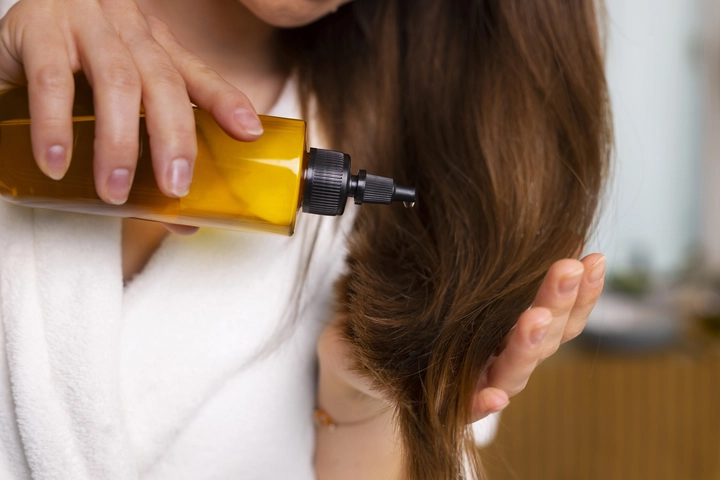
Anti-Frizz Hair Care Products are developed by combining conditioning, smoothing, moisture management, and film-forming strategies to control frizz and improve hair manageability. An effective formula depends not on a single ingredient, but on how the formulation, product format, target hair type, sensory profile, and performance requirements work together.
What Causes Hair Frizz and What Should an Anti-Frizz Product Do?
Hair frizz is mainly influenced by moisture imbalance, humidity, surface damage, and friction, so an anti-frizz product needs to smooth the hair surface while improving conditioning and moisture control.
Several factors can contribute to visible frizz:
- Humidity: Hair can absorb moisture from the surrounding environment, affecting its shape and surface behavior.
- Raised or damaged cuticles: Chemical processing, heat, and environmental exposure can leave the hair surface less smooth.
- Dryness and porosity: Porous hair can interact differently with moisture and may be more difficult to keep smooth.
- Friction: Brushing, towel drying, and contact between hair fibers can contribute to surface roughness and breakage.
- Hair structure: Curly and wavy hair naturally has areas of uneven tension that can make frizz more visible.
What Should an Anti-Frizz Product Achieve?
Rather than simply adding moisture, a well-designed product may need to address several performance goals at the same time:
Smoothness — help the hair surface feel more uniform and polished.
Conditioning — improve softness, slip, and combability.
Moisture management — help maintain an appropriate moisture balance without creating an undesirable feel.
Friction reduction — reduce roughness during combing and everyday handling.
Manageability — make the hair easier to style and control.
This is why anti-frizz development is fundamentally a formulation challenge. The product needs to address the causes and characteristics of frizz while still delivering a pleasant application and after-feel.
Key Formulation Goals for Anti-Frizz Hair Care
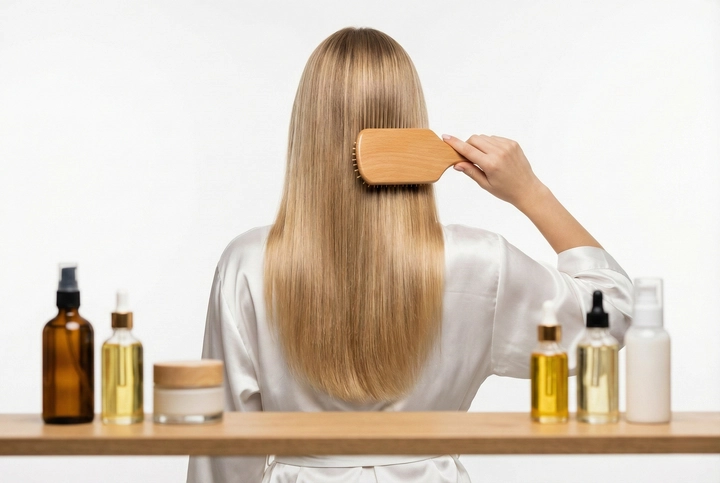
An effective Anti-Frizz Hair Care Formulation balances surface conditioning, moisture management, friction reduction, and sensory performance according to the intended product and hair type.
1. Improve Surface Smoothness
Conditioning and film-forming systems can help create a smoother feel on the hair fiber. This can improve combability, softness, shine, and overall manageability.
However, the level of deposition needs to be controlled. More conditioning does not automatically mean better performance, particularly for fine hair.
2. Manage Moisture
Moisture plays an important role in hair behavior, especially in humid environments. Formulators may combine humectants, emollients, conditioning agents, and film-forming materials to create an appropriate moisture-management system.
The goal is not simply to maximize hydration. The formula needs to support the desired hair feel and behavior under the conditions in which the product is expected to be used.
3. Reduce Friction
Lowering friction can improve both the immediate sensory experience and everyday manageability. Depending on the formula, conditioning agents, silicones, esters, oils, and film-forming materials may contribute to this effect.
4. Balance Performance With Texture
An anti-frizz product also needs the right sensory profile.
A rich conditioner may work well for coarse or damaged hair but feel too heavy on fine hair. A lightweight serum may provide smoothness without enough conditioning for highly porous hair.
The best formulation is therefore not necessarily the richest one; it is the one that provides the required performance at an appropriate level for its target user.
Common Ingredients Used in Anti-Frizz Hair Products
Anti-Frizz Hair Products commonly combine several ingredient categories to provide conditioning, smoothness, moisture management, and surface protection.
| Ingredient category | Primary role | Key formulation consideration |
|---|---|---|
| Conditioning agents | Softness, slip, detangling | Deposition and hair feel |
| Emollients & oils | Softness and lubrication | Spreadability, residue, hair type |
| Humectants | Moisture management | Environmental conditions and formula balance |
| Film-forming ingredients | Surface smoothing and conditioning | Film feel, buildup, compatibility |
| Silicones | Slip, shine, smoothness | Product positioning and sensory profile |
| Silicone alternatives | Conditioning and surface feel | Overall system performance |
Conditioning Agents
Conditioning agents are fundamental to many anti-frizz formulas because they can improve slip, detangling, softness, and manageability.
Cationic conditioning materials are particularly common in rinse-off conditioners and treatments, where deposition on the hair surface is an important part of the product’s performance.
Emollients and Oils
Oils, esters, and other emollients can contribute softness and help reduce the rough feel associated with dry or damaged hair.
The selection should consider more than the ingredient’s marketing appeal. Spreadability, absorption, residue, compatibility, and the target hair type all influence the final result.
Humectants
Humectants help attract and retain water and can support moisture management in hair care formulas.
However, their use needs to be considered within the complete formulation and intended environment. A humectant should not be treated as a standalone solution for humidity-related frizz.
Film-Forming Ingredients
Film-forming materials can create a thin layer on the hair surface, supporting smoothness, conditioning, and manageability.
The desired film depends on the product. A heavier system may benefit dry, coarse hair, while fine hair may require a lighter approach to avoid a coated or weighed-down sensation.
Silicones and Silicone Alternatives
Certain silicones can provide excellent slip, smoothness, shine, and friction reduction, making them useful in conditioners, serums, and other smoothing products.
For silicone-free positioning, formulators can build alternative conditioning and film-forming systems. However, replacing one ingredient does not necessarily reproduce the same performance. The surrounding formula often needs to be adjusted as well.

How Formulators Combine Ingredients for Frizz Control
Effective anti-frizz performance generally comes from a coordinated formulation system in which different ingredients provide complementary functions.
For example, a conditioner might combine:
Conditioning system
Provides slip, softness, and detangling.
Emollient phase
Supports softness and a smoother sensory profile.
Film-forming system
Helps improve surface feel and manageability.
Supporting ingredients
Help achieve the desired viscosity, stability, fragrance, preservation, and overall product experience.
The exact balance depends on the product’s purpose.
A lightweight leave-in may prioritize low residue and easy spreadability, while a treatment for highly damaged hair may require a more intensive conditioning system.
Why Ingredient Compatibility Matters
Ingredients also interact with one another. Surfactants, polymers, oils, conditioning agents, fragrances, preservatives, and other components can influence the final texture and performance.
This means formulators evaluate the finished formula, rather than judging ingredients only by their individual benefits.
Laboratory samples are therefore important for assessing properties such as:
- wet and dry combability
- spreadability
- rinse feel
- softness
- shine
- residue
- hair weight
- overall manageability
Formulating Different Types of Anti-Frizz Hair Care Products
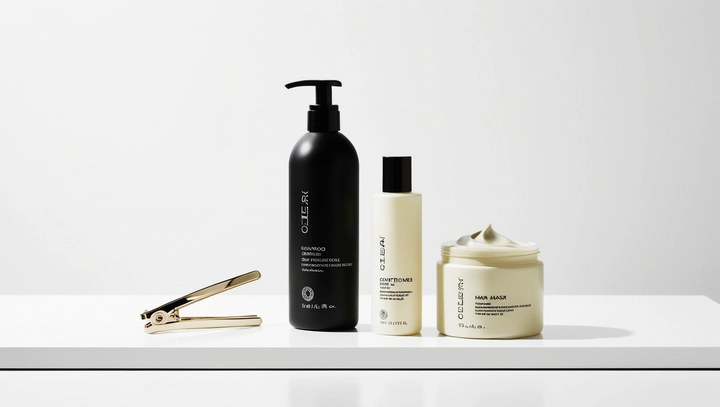
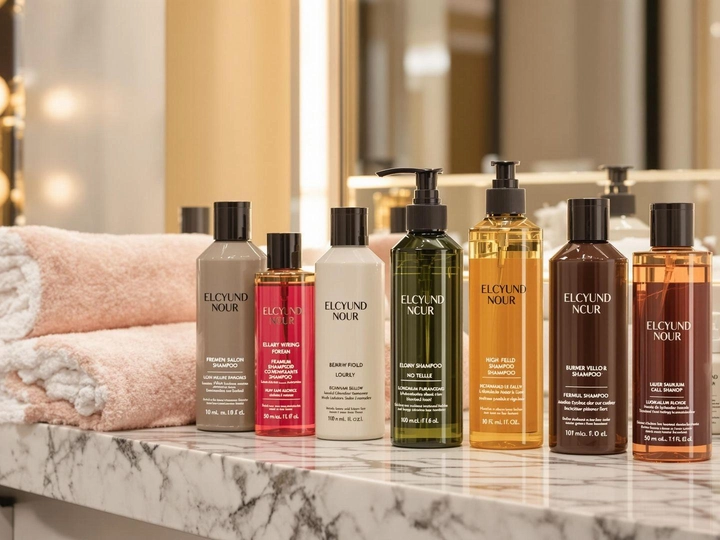
Different product formats require different formulation strategies because each one performs a different role in the hair care routine.
| Product format | Main formulation focus |
|---|---|
| Anti-frizz shampoo | Cleansing with sufficient conditioning support |
| Anti-frizz conditioner | Slip, detangling, softness, and smoothness |
| Hair mask | More intensive conditioning for dry or damaged hair |
| Leave-in conditioner | Lightweight, lasting conditioning and manageable residue |
| Hair serum | Surface smoothness, shine, slip, and targeted frizz control |
| Hair oil | Softness, shine, spreadability, and oil-phase performance |
An anti-frizz shampoo must balance cleansing with conditioning so that hair does not feel excessively dry after washing.
A conditioner or mask has more opportunity to focus on deposition and intensive conditioning. The formula can therefore be designed around different levels of richness depending on the intended hair type.
Leave-in products require particular attention to weight and residue because they remain on the hair after application.
Serums and oils often have a more targeted role. Their formulation may emphasize smoothness, shine, spreadability, and a polished finish rather than rinse-off conditioning.
The product format should therefore be established before the final formulation strategy is selected.
How Hair Type Influences Anti-Frizz Product Development
Hair type directly influences Anti-Frizz Hair Product Development, because the level of conditioning and the desired sensory profile can vary significantly between fine, coarse, curly, and damaged hair.
| Hair type | Typical formulation considerations |
|---|---|
| Fine hair | Lightweight conditioning, low residue, volume retention |
| Coarse hair | Richer conditioning, emollience, softness |
| Curly or wavy hair | Frizz control while maintaining definition and flexibility |
| Dry hair | Moisture support, softness, and improved manageability |
| Damaged or bleached hair | More intensive conditioning and surface support |
| High-porosity hair | Moisture management and stronger surface conditioning |
For fine hair, excessive oils or conditioning materials may reduce volume or create a heavy sensation.
Coarse and highly textured hair may benefit from richer conditioning and emollient systems, particularly when dryness and roughness are major concerns.
Curly and wavy hair requires another balance: reducing frizz without making the hair feel rigid or compromising curl definition.
This is why the target hair type should be established at the beginning of development rather than after the formula has already been designed.
From Product Concept to Finished Anti-Frizz Formula
Professional product development connects the initial product concept with laboratory formulation, testing, optimization, approval, and manufacturing scale-up.
1. Product Brief
Define the target hair type, product format, desired benefits, texture, fragrance, ingredient preferences, and market positioning.
2. Formula Development
Formulators select appropriate raw materials and develop the initial formula around the required performance and sensory profile.
3. Laboratory Sample
The first samples are evaluated for appearance, texture, spreadability, application, rinse feel, and initial hair performance.
4. Testing & Optimization
The formula is adjusted based on laboratory evaluation, performance feedback, stability requirements, packaging compatibility, and other project specifications.
5. Formula Approval
Once the performance and sensory requirements have been met, the final formula can be approved for production.
6. Production Scale-Up
The approved laboratory formula is translated into a repeatable manufacturing process, with attention to batch processing, filling, packaging, and quality control.
A successful development process therefore has to work at both laboratory and manufacturing scale.
A formula may perform well in a small laboratory batch but still require process adjustment when produced at commercial volume. Connecting R&D with manufacturing helps identify these issues before full-scale production.
What Brands Should Consider When Developing Anti-Frizz Hair Care Products
Brands should define the target hair type, product format, performance goals, sensory profile, ingredient direction, testing requirements, and manufacturing feasibility before finalizing an anti-frizz formula.
Target Hair Type & Product Format
Start by defining who the product is designed for and how it will be used.
Is the product intended for fine hair, coarse hair, curly hair, damaged hair, or a broader audience? Will it be a shampoo, conditioner, mask, leave-in, serum, or oil?
These decisions directly affect the formulation strategy.
Performance & Sensory Goals
Define the balance between:
- smoothness
- conditioning
- shine
- humidity control
- manageability
- texture
- fragrance
- residue
A formula that performs well but feels too heavy, sticky, oily, or difficult to distribute may not deliver a satisfactory consumer experience.
Ingredient & Market Positioning
Brands may choose different formulation directions, such as silicone-based, silicone-free, botanical, or other ingredient positioning.
These choices should be considered early because changing the ingredient system later can affect texture, sensory performance, and overall formulation balance.
Testing & Packaging Compatibility
Testing should address more than formula stability. Product performance, sensory characteristics, and packaging compatibility may all need evaluation.
For example, viscosity, oil content, dispensing mechanism, and packaging material need to work together. A pump, tube, bottle, or applicator can influence how consumers experience the finished product.
Manufacturing Feasibility
Working with a capable Hair Care Products Manufacturer can connect formulation, testing, scale-up, filling, labeling, and quality control.
For brands developing a new product line, this integrated approach can make it easier to move from an approved laboratory formula to consistent commercial production.
Frequently Asked Questions
Conclusion
Developing an effective anti-frizz product requires more than choosing ingredients associated with smoothness or moisture. The formulation needs to balance performance, hair type, product format, sensory experience, testing, and manufacturing requirements.
For brands planning a new anti-frizz product, Mountain Sea can provide proven anti-frizz formulas or develop a custom formulation based on your product concept and requirements. Please contact us to discuss your anti-frizz hair care product.