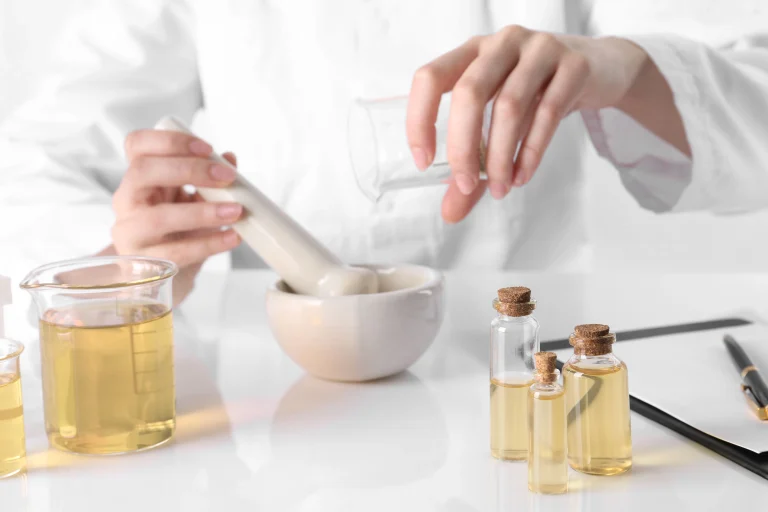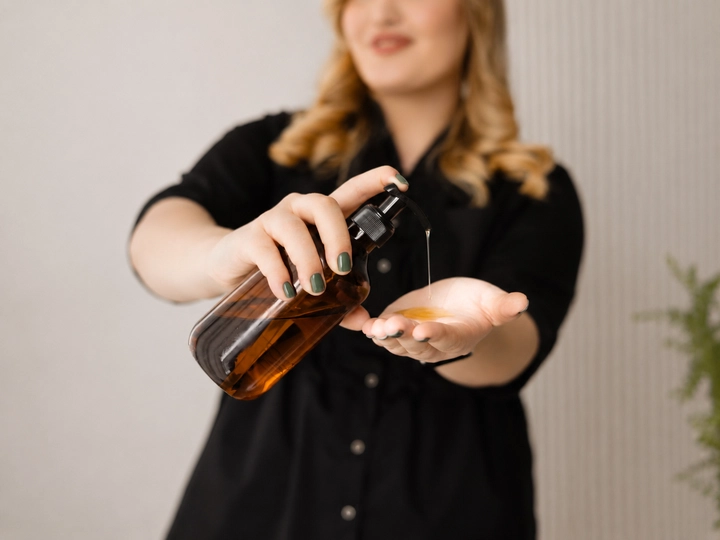
Hair care contract manufacturers help brands bring products to market without investing in their own production facilities. Beyond manufacturing, many partners support formulation development, testing, packaging coordination, quality control, and regulatory preparation.
For hair care brands, understanding how contract manufacturing works is not just about finding production capacity. It is about evaluating whether a manufacturing partner can support your product strategy, growth plans, quality expectations, and time-to-market objectives.
What Is a Hair Care Contract Manufacturer?
A hair care contract manufacturer is a third-party company that develops, manufactures, fills, and packages hair care products on behalf of a brand. Depending on the project scope, support may range from production-only services to full product development and commercialization.
In the hair care industry, contract manufacturing has become the preferred model for many brands because it allows them to focus resources on branding, distribution, marketing, and customer acquisition rather than building and operating a manufacturing facility.
A typical project may follow this process:
Brand Concept ──> Formula Development or Formula Transfer ──> Testing & Validation ──> Production ──> Packaging & Labeling ──> Market Launch
Hair care contract manufacturing is particularly common among:
- Emerging hair care brands
- Professional salon brands
- E-commerce and DTC brands
- Retail private label programs
- International distributors launching proprietary product lines
The exact scope of responsibility varies from project to project, which is why understanding the services provided by a contract manufacturing partner is critical before development begins.
What Services Do Hair Care Contract Manufacturers Offer?
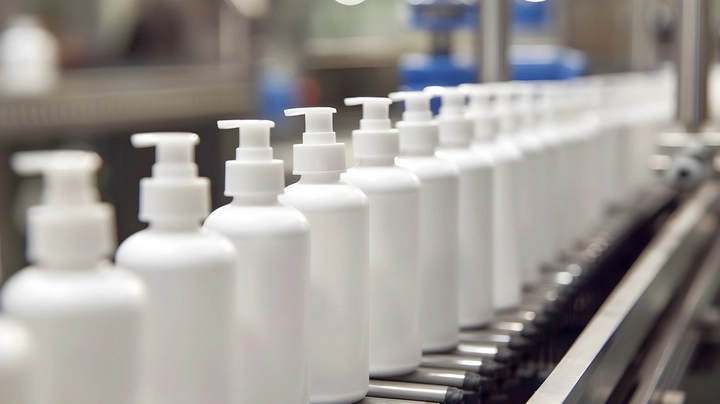
Most hair care contract manufacturers do far more than produce finished goods. In practice, successful projects require coordination across formulation, compliance, packaging, procurement, production, and quality management.
| Service Area | Typical Scope |
|---|---|
| Product Development | Formula creation, reformulation, performance optimization |
| Custom Hair Care Formulation | Ingredient selection, claims support, texture and fragrance development |
| Raw Material Sourcing | Procurement of functional and active ingredients |
| Testing & Quality Assurance | Stability, compatibility, and microbiological testing |
| Manufacturing | Mixing, processing, filling, and packaging |
| Packaging Support | Component sourcing and packaging compatibility review |
| Regulatory Support | Documentation and market-specific compliance support |
One common misconception is that formulation and manufacturing are independent activities. In reality, production feasibility often influences formulation decisions from the beginning.
For example:
- A highly viscous hair mask may require specific filling equipment.
- Certain botanical ingredients can affect color stability over time.
- Premium active ingredients may improve marketing claims but significantly increase product cost.
- Custom packaging may extend project timelines due to sourcing requirements.
These trade-offs are usually evaluated during the product development phase rather than after production begins.
This is why hair care product development should be viewed as a collaborative process between the brand and the manufacturing partner rather than a series of isolated decisions.
What Types of Hair Care Products Can Be Manufactured?
Modern hair care contract manufacturers typically support a broad range of product categories.
Hair Cleansing Products
- Daily shampoos
- Sulfate-free shampoos
- Clarifying shampoos
- Anti-dandruff shampoos
- Color-protection shampoos
Conditioning Products
- Rinse-off conditioners
- Leave-in conditioners
- Deep conditioning treatments
Hair Treatment Products
- Hair masks
- Hair oils
- Hair serums
- Heat-protection treatments
- Bond-repair products
Scalp Care Products
- Scalp serums
- Scalp treatments
- Exfoliating scalp products
Hair Growth and Specialty Products
- Hair growth serums
- Thickening treatments
- Anti-hair-loss products
The manufacturing requirements behind these products can vary significantly.
For instance, a clarifying shampoo and a premium hair serum may have entirely different raw material requirements, processing methods, testing protocols, and packaging considerations. Brands planning to expand into multiple categories should evaluate whether a hair care manufacturer can support their future product roadmap rather than only their first launch.
Contract Manufacturing vs. OEM vs. ODM vs. Private Label
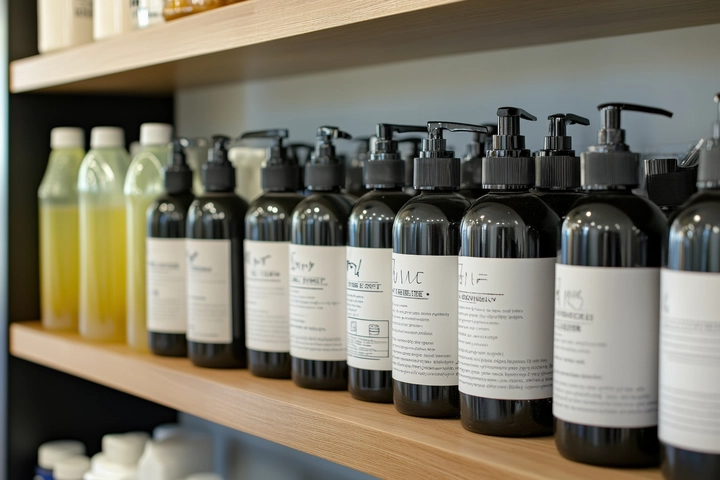
These terms are often used interchangeably, but they represent different levels of customization and development involvement.
| Model | Formula Ownership | Customization Level | Typical Use Case |
|---|---|---|---|
| Contract Manufacturing | Fully custom or transferred formula | High | Brands seeking unique products |
| OEM | Brand-owned formula | Medium to High | Brands with existing formulations |
| ODM | Manufacturer-developed formula | Medium | Faster product launches |
| Private Label | Ready-made formula | Low | Rapid market entry |
The most appropriate model depends on business objectives.
If product differentiation is a priority, contract manufacturing or a custom OEM approach may offer greater flexibility.
If speed to market is the primary goal, ODM or private label development can significantly reduce development timelines.
The trade-off is straightforward:
- More customization generally means longer development timelines and higher investment.
- Faster launch models typically involve less formulation differentiation.
Understanding this balance helps brands align development strategy with commercial goals.
Why Do Hair Care Brands Choose Contract Manufacturers?
Most brands choose contract manufacturing because it provides access to expertise and infrastructure that would be difficult or expensive to build internally.
Key advantages include:
Faster Commercialization
Production facilities, quality systems, sourcing networks, and technical teams already exist, reducing the time required to move from concept to finished product.
Lower Capital Investment
Building manufacturing capabilities requires substantial investment in equipment, facilities, personnel, validation, and compliance systems.
Contract manufacturing allows brands to allocate resources toward growth activities instead.
Access to Technical Expertise
Hair care formulations continue to evolve with ingredient innovations, claim trends, and regulatory developments.
Working with an experienced hair care manufacturer gives brands access to technical knowledge that may otherwise require a larger internal team.
Flexible Production Scaling
Production requirements often change as brands grow.
Launching with modest volumes and scaling manufacturing as demand increases is often more practical than making large upfront operational investments.
Better Operational Focus
Many successful hair care brands focus on:
- Brand building
- Product positioning
- Marketing
- Retail expansion
- Customer acquisition
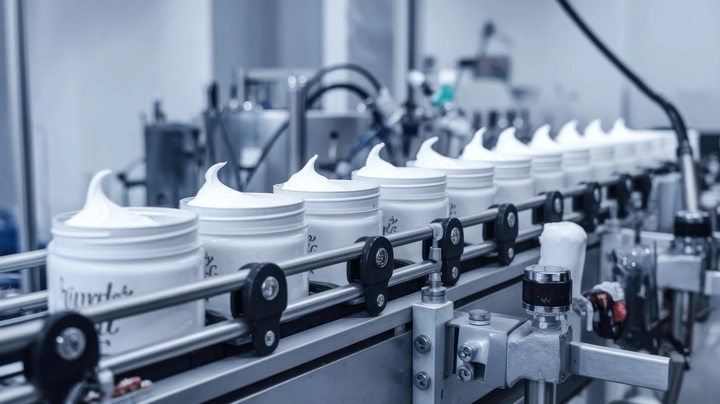
while relying on contract manufacturing partners for production execution.
What Does the Partnership Process Look Like?
Successful manufacturing projects generally follow a structured development pathway.
Step 1: Product Concept Definition
The brand defines product goals, target market, positioning, claims, and pricing expectations.
Clear objectives at this stage often prevent costly revisions later.
Step 2: Formula Development
A custom hair care formulation may be developed from scratch or adapted from an existing system.
Key considerations include:
- Target performance
- Ingredient restrictions
- Cost targets
- Regulatory requirements
- Manufacturing feasibility
Step 3: Sampling and Evaluation
Samples are reviewed for:
- Texture
- Fragrance
- Appearance
- Product performance
- Consumer positioning
Multiple rounds of refinement are common, especially for custom projects.
Step 4: Packaging Selection
Packaging decisions affect:
- Product protection
- Filling efficiency
- Shipping performance
- Consumer experience
Compatibility testing is often necessary for certain formulations.
Step 5: Production
Once specifications are approved, manufacturing begins according to established quality procedures.
Step 6: Inspection and Release
Quality checks verify product specifications before shipment.
Step 7: Delivery and Market Launch
Finished products are released for distribution and commercial sale.
The timeline for each stage varies considerably depending on the level of customization, testing requirements, ingredient complexity, and packaging development involved.
Is a Hair Care Contract Manufacturer Right for Your Brand?
For many brands, the answer is yes, but not every project requires the same level of manufacturing partnership.
A contract manufacturing model is often a strong fit when:
| Situation | Why It Matters |
|---|---|
| Launching a new hair care brand | Avoids large infrastructure investments |
| Developing proprietary formulas | Supports product differentiation |
| Expanding into new categories | Provides technical and operational resources |
| Increasing production volume | Enables capacity growth without facility expansion |
| Entering international markets | Helps manage production and compliance requirements |
However, brands should also evaluate practical considerations such as:
- Expected order volumes
- Degree of customization required
- Product complexity
- Launch timeline expectations
- Long-term product portfolio plans
The best manufacturing relationships are based on strategic alignment, not simply production availability.
Conclusion
Hair care contract manufacturers play a much larger role than producing finished goods. They often contribute to formulation development, testing, sourcing, manufacturing execution, quality assurance, and product commercialization.
For hair care brands, contract manufacturing helps balance product innovation, operational efficiency, and scalable growth. Understanding how these partnerships work makes it easier to choose a manufacturing model that supports both immediate launch goals and long-term brand development.
Whether you’re developing a custom formula, expanding into new product categories, or seeking a reliable production partner, an experienced hair care contract manufacturer can streamline the journey from concept to commercialization. Mountain Sea provides end-to-end support, from formulation development and testing to manufacturing and packaging. Get in touch with our team to explore how we can support your brand’s growth.