Private label hair care products typically go through several testing stages before mass production, including stability, microbiological, safety, and packaging compatibility testing. The process helps manufacturers confirm that a formula is safe, stable, consistent, and suitable for its intended packaging and market.
Why Is Testing Important for Private Label Hair Care Products?
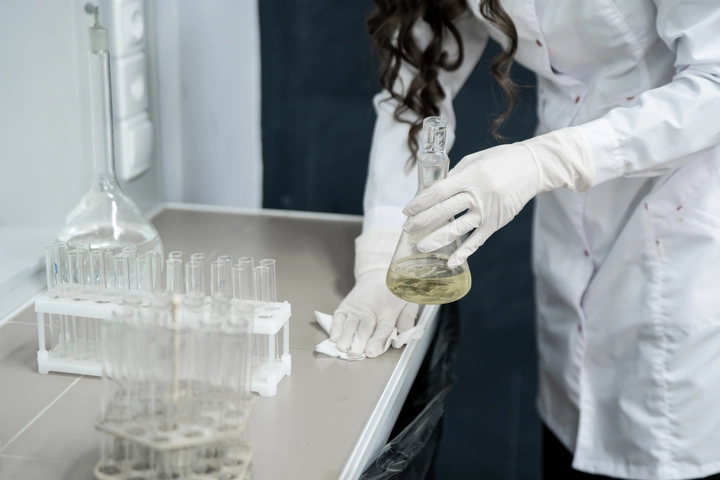
Hair care private label product testing is not a single inspection performed at the end of manufacturing. It is a series of evaluations carried out during formulation, product development, production, and final quality control.
For brands, this process helps identify problems before products reach consumers. A shampoo that looks and performs well in an initial laboratory sample, for example, may still experience viscosity changes, separation, odor changes, or packaging issues after extended storage.
Testing is particularly important when a brand is launching a new formulation or modifying an existing product. It provides evidence that the product can maintain its intended characteristics under expected storage and use conditions.
Testing helps reduce several common risks:
- Formula instability: Separation, precipitation, color changes, or viscosity fluctuations
- Microbial contamination: Unacceptable levels of bacteria, yeast, or mold
- Preservation problems: An inadequate preservation system in water-based formulas
- Packaging issues: Leakage, deformation, or interaction between the formula and container
- Production inconsistencies: Differences between laboratory samples and commercial batches
- Quality complaints: Changes in appearance, fragrance, texture, or performance after launch
For private label haircare brands, testing is therefore part of product development rather than simply a final quality check.
What Tests Are Required for Hair Care Products?
The exact testing program depends on the product type, formula, packaging, intended use, and target market. A shampoo, hair oil, and styling spray do not necessarily require the same testing approach.
| Test | What It Evaluates | Typical Stage |
|---|---|---|
| Stability testing | Formula performance over time and under different conditions | Product development |
| Microbiological testing | Microbial quality and contamination | Formula and finished product testing |
| Preservative efficacy testing | Effectiveness of the preservation system | Formula development |
| Packaging compatibility testing | Interaction between formula and packaging | Product development |
| Safety testing | Product safety and consumer-use considerations | Before launch |
| Physical & chemical testing | pH, viscosity, appearance, and other specifications | Development and production |
| Finished product testing | Whether the commercial batch meets specifications | Before shipment |
Not every product requires every test in the same way. A professional manufacturer should determine the appropriate testing protocol based on the formula and the requirements of the target market.
Step-by-Step Hair Care Product Testing Process
Testing normally begins before mass production. The process can be divided into several stages, from laboratory samples through final batch inspection.
Step 1: Formula Review and Laboratory Sample Testing
Before a product enters formal testing, the formulation needs to be reviewed and evaluated as a laboratory sample.
The manufacturer typically examines characteristics such as:
- Appearance and color
- Fragrance
- Texture
- pH
- Viscosity
- Dispersion or emulsification
- Application and product performance
This stage allows the manufacturer and brand to identify obvious formulation problems early.
For example, a moisturizing shampoo may need to provide sufficient cleansing while maintaining the desired viscosity and sensory profile. A hair mask may require stable emulsification and a consistent texture. A hair oil may require particular attention to clarity, odor, and oxidation.
If the brand requests changes to the formula, fragrance, texture, or performance, additional samples may be evaluated before the final formula is approved.
Step 2: Stability Testing
Stability testing evaluates whether a product maintains its intended characteristics during storage.
Depending on the product and testing protocol, manufacturers may monitor:
- Color
- Odor
- pH
- Viscosity
- Texture
- Phase separation
- Precipitation
- Appearance
- Overall physical stability
Different product categories can have different stability concerns.
Shampoo and conditioner: Changes in viscosity, pH, appearance, or phase stability may be important indicators.
Hair masks: Emulsion stability, texture, viscosity, and appearance require particular attention.
Hair oils: Oxidation, odor, color, and clarity can become important over time.
The purpose is not simply to confirm that a product looks acceptable on the day it is made. The goal is to understand whether the formulation can maintain its expected characteristics throughout its intended storage period.
Related Reading: How Hair Product Manufacturers Ensure Product Quality
Step 3: Microbiological Testing
Water-based hair care products can provide an environment in which microorganisms may grow if the formulation and preservation system are not properly controlled.
Microbiological testing evaluates the microbial quality of the product and may include testing for:
- Total microbial count
- Yeast and mold
- Specified microorganisms, where applicable
This is especially relevant to products such as:
- Shampoos
- Conditioners
- Hair masks
- Leave-in treatments
- Styling gels
Microbiological testing should not be confused with preservative efficacy testing. They address related but different questions.
Microbiological testing examines the microbial condition of a product at a particular testing stage, while preservative efficacy testing evaluates whether the preservation system can control microbial growth when challenged under a defined test protocol.
Step 4: Preservative Efficacy Testing
Preservation is particularly important for water-containing formulations.
A product can initially pass microbiological testing while still requiring further evaluation of whether its preservation system is sufficiently robust. Preservative efficacy testing is designed to evaluate how effectively the preservation system controls microbial growth under the conditions defined by the applicable testing method.
This is particularly relevant when:
- A new preservation system is introduced
- The formula is substantially modified
- The water phase or ingredient composition changes
- The product has a high level of consumer exposure during use
The appropriate testing approach depends on the formulation and target market rather than simply the product category.
Step 5: Packaging Compatibility Testing
The formula is only one part of the finished product. The packaging also needs to work with the formulation.
A product may be filled into:
- Plastic bottles
- Tubes
- Jars
- Pump bottles
- Spray bottles
- Dropper bottles
Packaging compatibility testing can help identify problems such as:
- Leakage
- Container deformation
- Pump or spray failure
- Discoloration
- Fragrance absorption
- Changes caused by interaction between the formula and packaging material
This matters because a formula that performs well in a laboratory container may behave differently when placed in the final commercial packaging.
For private label brands, packaging should therefore be evaluated as part of the finished product rather than treated as a separate design decision.
Step 6: Safety Testing
Safety evaluation helps determine whether the finished product is appropriate for its intended use.
The exact requirements vary according to the product, ingredients, claims, intended use, and target market. Depending on the situation, the process may involve safety assessment and specific testing or documentation.
Brands should avoid assuming that every cosmetic product requires the same safety testing protocol. The manufacturer and relevant testing professionals should determine what is appropriate for the specific product and market.
This is particularly important when developing products containing new active ingredients, specialized treatment concepts, or ingredients with specific regulatory considerations.
Step 7: Pilot Batch Testing
Once the laboratory formula has been approved, a pilot or scale-up batch can help determine whether the formula performs consistently when manufactured using commercial production equipment.
This step addresses an important manufacturing question:
Can the approved laboratory formula be reproduced consistently at production scale?
During scale-up, manufacturers may evaluate:
- Mixing performance
- Heating and cooling
- Homogenization
- Viscosity
- Appearance
- Fragrance
- Filling performance
- Batch consistency
This stage can reveal issues that are difficult to identify in a small laboratory sample.
A formula that works perfectly in a small beaker may require adjustments to mixing speed, processing temperature, or production sequence when transferred to a much larger manufacturing vessel.
How Long Does Hair Care Product Testing Take?
There is no single testing timeline for every product because testing time depends on the formula, testing protocol, packaging, and level of customization.
A typical development sequence looks like this:
Existing Formula → Sample Approval → Testing → Packaging Confirmation → Production
For a customized product, the process may look more like:
Formula Development → Sample Adjustments → Formula Approval → Testing → Packaging Compatibility → Pilot Production → Mass Production
The timeline can increase when a brand requests:
- A completely new formulation
- Multiple formula modifications
- New fragrance development
- New packaging
- Additional third-party testing
- Market-specific documentation
Brands should therefore ask the manufacturer for a product-specific testing and production timeline rather than relying on a generic lead time.
What Documents Should Private Label Brands Request?
Testing is more useful when the results are properly documented.
Depending on the product and market, brands may request documents such as:
- Product specifications
- Certificate of Analysis (COA)
- Microbiological test reports
- Stability testing results
- Safety-related documentation
- Ingredient documentation
- Finished product quality records
- Applicable compliance documents
The specific documents available will depend on the product and testing program.
Brands should also make sure that the specifications used for production are clearly defined. These specifications may include acceptable ranges for characteristics such as pH, viscosity, appearance, color, odor, and fill quantity.
Clear specifications make it easier to determine whether a production batch matches the approved product.
Does Every Hair Care Product Need the Same Testing?
No. The testing priorities can vary considerably depending on the product format and formula.
| Product | Key Testing Considerations |
|---|---|
| Shampoo | pH, viscosity, microbiological quality, stability |
| Conditioner | Emulsion stability, viscosity, microbiological quality |
| Hair Mask | Emulsion stability, viscosity, preservation, appearance |
| Hair Oil | Oxidation, odor, color, clarity, packaging compatibility |
| Hair Spray | Spray performance, stability, packaging performance |
| Styling Gel | Viscosity, stability, preservation, packaging compatibility |
For example, oxidation may be a major consideration for an oil-based product, while preservation and microbiological quality may receive greater attention in a water-based formula.
This is why a testing plan should be developed around the actual formulation instead of applying the same checklist to every product.
How Manufacturers Manage Testing for Private Label Hair Care
A capable manufacturer should have a structured process connecting formulation, testing, production, and quality control.
Look for manufacturers that can demonstrate:
Product Development Capability
The manufacturer should be able to develop or modify formulas based on the brand’s target texture, ingredients, fragrance, performance, and positioning.
Quality Control Procedures
Quality control should cover more than the finished bottle. It should include appropriate checks during raw material handling, production, filling, and finished product inspection.
Testing Coordination
The manufacturer should be able to identify which tests are appropriate for the product and coordinate testing when external laboratories are required.
Production Scale-Up
The manufacturer should have a defined process for transferring an approved laboratory formula into commercial production while maintaining consistent product specifications.
Documentation
A professional manufacturing partner should be able to explain what quality and testing documentation can be provided and which documents may require additional testing or third-party services.
For brands evaluating a private label hair care manufacturer, these capabilities can be more meaningful than simply comparing product catalogs or quoted unit prices.
Private Label Hair Care Product Testing Checklist
Before approving a product for mass production, brands can use the following checklist:
- Has the final formula been approved?
- Has stability testing been completed or appropriately initiated?
- Has microbiological quality been evaluated?
- Has preservative efficacy been assessed where applicable?
- Has the final packaging been checked for compatibility?
- Are product specifications documented?
- Has the formula been validated at production scale?
- Are finished-batch QC procedures defined?
- Do you know which testing documents will be provided?
- Have target-market testing and compliance requirements been reviewed?
This checklist can help brands identify gaps before committing to a large production order.
Conclusion
Product testing is an essential part of developing reliable private label hair care products. From formula stability and microbiological testing to packaging compatibility and final quality control, each stage helps identify potential issues before products reach the market.
At Mountain Sea, every hair care product undergoes a complete and rigorous testing and quality control process to ensure consistent quality, stability, and safety before production and delivery.
Ready to develop your next hair care product? Contact Mountain Sea to discuss your formula, packaging, and product requirements, and let’s work together to bring your product concept to market.