Private label hair care products can be customized at different levels, including fragrance, texture, ingredients, product performance, color, and packaging. The appropriate level depends on the starting formula, the type of change required, and how that change affects the overall product.
What Can Be Customized in Private Label Hair Care Products?
Many customization requests can be handled by adjusting an existing formula rather than developing a product entirely from scratch. However, the practical options depend on the formula, product format, and specific requirements.
| Customization Area | What Can Be Adjusted |
|---|---|
| Fragrance | Fragrance type, intensity, or fragrance-free options |
| Texture | Viscosity, richness, lightness, spreadability, and sensory feel |
| Ingredients | Active ingredients, botanical extracts, oils, and functional ingredients |
| Product Performance | Conditioning, cleansing, moisture, styling, frizz control, and other performance targets |
| Color | Product color and visual appearance |
| Packaging | Bottles, tubes, jars, pumps, labels, printing, and specifications |
The important distinction is that not every change has the same formulation impact. A fragrance adjustment may be relatively straightforward, while a significant ingredient or performance change may require additional formulation development and testing.
Fragrance and Color
Fragrance and color are common areas of customization for private label products. A brand may want a different fragrance profile, a stronger or lighter fragrance level, a fragrance-free version, or a specific product color to match its positioning.
Fragrance selection still needs to be evaluated within the finished formula. A fragrance can influence the overall sensory profile and may also interact with the formulation, so the final version should be assessed rather than treated as a simple substitution.
Color can usually be adjusted according to the desired appearance, but the selected colorant also needs to be compatible with the product format and formulation.
Texture and Sensory Experience
Texture is another frequent customization request. Brands may want a shampoo to feel lighter, a conditioner to feel richer, or a styling product to have a different viscosity or application profile.
Typical adjustments include:
- Viscosity
- Richness or lightness
- Spreadability
- Slip
- Absorption or rinse-off feel
- Overall sensory profile
Texture adjustments require more than changing one parameter in isolation. Viscosity, ingredient balance, stability, dispensing behavior, and sensory performance can be interconnected. A change that improves one characteristic may affect another, which is why the adjusted sample needs to be evaluated as a complete formulation.
Ingredients and Active Components
Ingredient customization can range from adding a specific botanical extract or active ingredient to replacing an ingredient within an existing formulation.
Common requests may involve:
- Active ingredients
- Botanical extracts
- Oils
- Functional ingredients
- Ingredient substitutions
The key consideration is compatibility. Adding or replacing an ingredient can affect the formula’s stability, texture, preservation system, sensory profile, or overall performance. It may therefore require more development work than a straightforward fragrance or color adjustment.
For private label hair care products, ingredient selection also needs to remain aligned with the product’s intended claims and target market. A requested ingredient change should be evaluated as part of the complete formulation rather than considered separately.
Product Performance
Product performance can also be adjusted when an existing formula does not fully match the intended product brief.
Depending on the product type, performance requirements may include:
- Cleansing
- Conditioning
- Moisture
- Frizz control
- Styling performance
- Shine
- Heat protection
The objective is not simply to add an ingredient associated with a particular benefit. The formulation needs to deliver the required performance while maintaining acceptable texture, stability, sensory characteristics, and manufacturing feasibility.
This is where product development becomes more formulation-driven. A change in one performance target can affect the balance of the entire formula, particularly when several performance requirements need to be achieved at the same time.
Packaging and Product Specifications
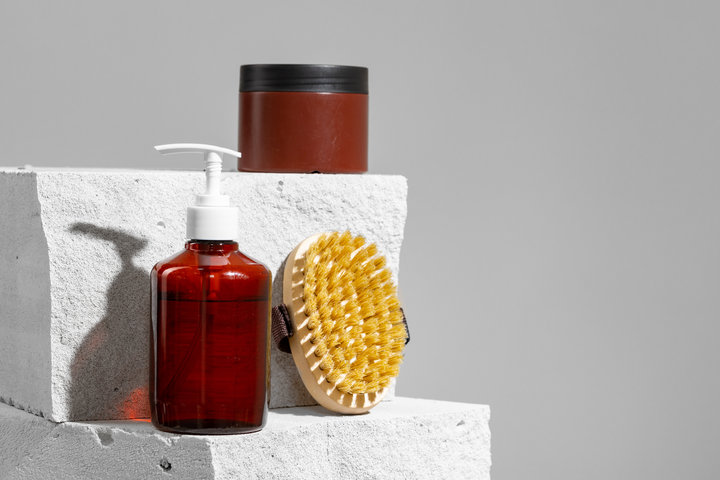
Customization does not stop at the formula. Packaging and product specifications can also be adapted to the brand’s requirements.
Options may include:
- Bottles, tubes, jars, or other formats
- Pumps and closures
- Product size
- Label design
- Logo printing
- Packaging specifications
Stock packaging can be a practical option when a brand wants to control development costs or move toward production more quickly. Custom packaging provides greater flexibility when the packaging itself is an important part of the product concept.
The appropriate choice depends on the required appearance, order volume, budget, production schedule, and packaging specifications.
How Much Can a Private Label Hair Care Product Be Customized?
A private label product can generally follow three development routes: a ready-made formula, an adjusted formula, or a custom formulation. The right route depends on how closely the required product matches an existing formula.
Ready-Made Formula
A ready-made formula is the most direct option when an existing product already meets the required performance and sensory profile.
This approach can be suitable when the priority is to:
- Launch an established product concept
- Minimize formulation development
- Use a proven formula
- Move efficiently toward sampling and production
A ready-made formula does not necessarily mean the product has to remain completely unchanged. Depending on the formulation, certain specifications may still be adjustable.
Formula Adjustment
Formula adjustment is appropriate when the product concept is already clear but the existing formula needs targeted changes.
For example, a brand may want to:
- Change the fragrance
- Adjust viscosity
- Modify the sensory feel
- Change selected ingredients
- Fine-tune product performance
This is often the practical middle ground between using a standard formula and developing a completely new product.
For brands looking for custom hair care products, starting with a suitable existing formula can also reduce unnecessary development work. The feasibility of each adjustment still needs to be assessed against the original formulation.
Custom Formulation
Custom formulation is more appropriate when the required product differs substantially from available formulas or has specific requirements that an existing formula cannot reasonably meet.
This may involve:
- A unique product concept
- Specific performance requirements
- Significant ingredient changes
- A different formulation structure
- Multiple requirements that need to be developed together
The advantage of custom formulation is greater control over the final product. The trade-off is that it generally involves more development, sample evaluation, optimization, and testing before the formula is approved for production.
With a library of more than 7,000 proven formulas, Mountain Sea can use existing formulation experience as a starting point when appropriate, while also supporting formula adjustment and custom formulation when the product requirements call for a different development route.
When Should a Brand Choose a Higher Level of Customization?
A higher level of customization is needed when an existing formula cannot fully meet the product brief. The right approach depends on how closely an available formula matches the product requirements.
| Product Situation | Suitable Approach |
|---|---|
| An existing formula already meets the key requirements | Use a ready-made formula |
| Specific characteristics need to be changed | Adjust an existing formula |
| Core product requirements cannot be achieved with an existing formula | Consider custom formulation |
What This Means in Practice
Ready-made is often enough when:
The formula already delivers the required performance, sensory profile, and ingredient profile. Additional reformulation may add development work without creating meaningful product value.
Formula adjustment makes sense when:
The product concept is already close to an existing formula, but specific elements such as fragrance, texture, ingredients, or performance need to be modified.
Custom formulation becomes relevant when:
The product requires a combination of characteristics that existing formulas cannot adequately deliver. A new formulation can then be developed around the specific product brief.
More customization is not automatically better. The appropriate level should be determined by the product requirements and the gap between the existing formula and the intended product concept.
How Private Label Hair Care Product Manufacturers Manage Customization
Private label hair care product manufacturers typically begin customization with a product brief rather than immediately changing the formula. The brief defines the intended product, required performance, sensory expectations, ingredients, format, packaging, and other specifications.
A typical development process is:
Product Brief → Formula Selection → Sample Development → Adjustment → Testing → Formula Approval → Production
The starting point may be an existing formula from a manufacturer’s formulation library. If it meets most of the requirements, targeted adjustments can be evaluated before considering a more extensive formulation project.
For brands working with private label hair product manufacturers, this distinction is useful because it helps define the scope of development at an early stage. A manufacturer can assess whether the requested changes are suitable for an existing formula, require formulation adjustment, or call for a new formulation.
At Mountain Sea, this process is supported by an in-house R&D laboratory, a library of more than 7,000 proven formulas, and integrated production capabilities. The goal is to match the development route to the actual product requirements rather than treating every project as either a fixed formula or a completely new formulation.
Choosing the Right Customization Approach
The right approach depends primarily on how specific the product requirements are and how much they differ from an existing formula.
| Product Requirement | Suitable Approach |
|---|---|
| A proven product is already suitable | Ready-made formula |
| A few specific characteristics need to change | Formula adjustment |
| The product requires a substantially different formulation | Custom formulation |
For a brand with a clear product brief, starting with a suitable proven formula can be more efficient than developing everything from zero. When the existing formula cannot meet the required performance or product concept, deeper formulation work becomes more appropriate.
The objective is not to maximize customization. It is to achieve the required product result with the appropriate level of development.
Conclusion
Private label hair care products can be customized across fragrance, texture, ingredients, performance, color, packaging, and other specifications. The key is determining whether the requirement can be handled through a proven formula, targeted formula adjustment, or custom formulation.
Mountain Sea offers more than 7,000 proven formulas, together with formula adjustment and custom formulation services.
For brands developing a new product or modifying an existing concept, contact Mountain Sea to discuss the product requirements and determine the most suitable development approach.