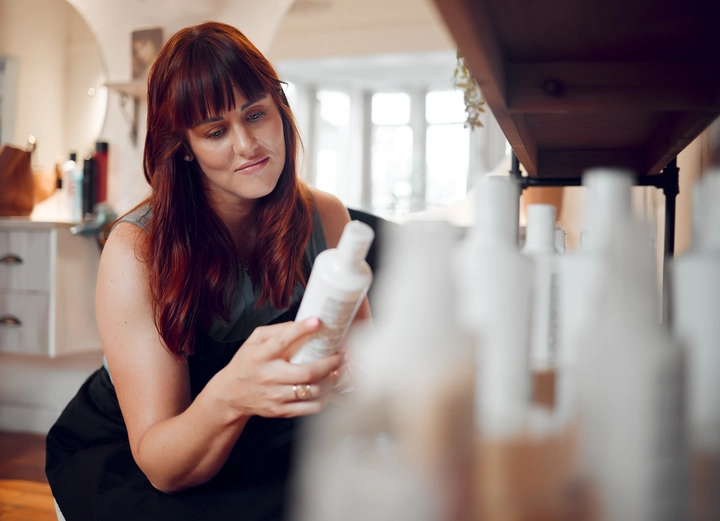
Launching a successful private-label hair care brand requires more than just choosing formulas and packaging. To build profitable private label hair care products that can compete in the long term, brands need the right market positioning, reliable private label hair care manufacturers, scalable production systems, and a clear growth strategy.
In this guide, you will learn how to develop a high-performing private label hair care line, choose the right hair care manufacturer, avoid common production mistakes, and create a brand that can scale across online, retail, and salon markets.
1. Understand the Market Before Developing Private Label Hair Care Products
Many new brands begin by selecting products first. Strong brands begin with market demand.
Before developing private label hair care products, identify which customer problems remain underserved. Consumers today are looking for targeted solutions rather than generic formulas.
Some high-growth segments include:
- Scalp recovery and scalp wellness products
- Moisture systems for curly or high-porosity hair
- Repair solutions for chemically treated hair
- Simplified routines designed for men
- Clean and vegan formulations for ingredient-conscious buyers
Studying customer behavior also helps define price positioning, packaging expectations, and content strategy.
The most successful brands focus on solving a specific problem before expanding into broader categories.
2. Build a Product System Instead of Individual Products
A scalable private label hair care line should function as a complete system rather than disconnected products.
Instead of launching random SKUs, build products that support the same hair concern or treatment goal. A structured lineup often includes:
- A shampoo designed for a defined hair condition
- A conditioner that supports the same function
- A treatment product, such as a mask, serum, or scalp treatment
This approach improves customer retention because consumers are more likely to purchase multiple products within the same routine.
When developing formulations, hair care manufacturers like Mountain Sea can help ensure that ingredients, texture, fragrance, and product performance remain consistent across the entire product line.
3. Choose the Right Private Label Hair Care Manufacturers
Choosing the right production partner is one of the most important decisions when building a private label hair care brand.
Not all private label hair care manufacturers offer the same level of formulation expertise, quality control, or scalability. Before selecting a supplier, evaluate:
- Manufacturing certifications and compliance systems
- Batch consistency capabilities
- Minimum order quantities
- Packaging support services
- Formula customization options
- Export and regulatory experience
Reliable hair care product manufacturers should also provide stability testing and ingredient documentation to support long-term growth.
For brands planning to expand internationally, working with an experienced hair care manufacturer can reduce production risks and improve launch efficiency.
At Mountain Sea, brands receive support across formulation development, packaging coordination, and scalable production systems designed for long-term brand growth.
If you’d like to find out more about how to choose the right manufacturer for you, please read this blog post:
4. Validate Your Private Label Hair Care Products Before Scaling
One of the biggest mistakes brands make is moving directly into large production runs before proper testing.
Before scaling production, test your private label hair care products under real usage conditions.
Important validation areas include:
- Formula stability under temperature variation
- Customer experience consistency
- Packaging durability during shipping
- Product performance across different hair types
- Repeat purchase potential
Testing helps reduce costly reformulations and protects long-term brand reputation.
Experienced hair care product manufacturers often assist brands with sample testing and formulation adjustments before mass production begins
5. Create Branding That Supports Long-Term Growth
In today’s market, branding influences purchasing decisions as much as formulation quality.
A successful private label hair care line needs a clear visual and emotional identity that customers can recognize immediately.
Strong branding includes:
- A memorable and easy-to-pronounce brand name
- Consistent packaging design
- Clear messaging focused on product benefits
- Visual consistency across website and social media content
Packaging should also balance aesthetics with functionality. Consumers want products that look premium while remaining practical to use.
For many growing brands, strong packaging presentation also improves conversion rates on platforms like TikTok and Instagram.
6. Understand Compliance Requirements for Global Markets
Launching private label hair care products requires compliance with cosmetic regulations in each target market.
Different countries have different requirements for ingredient labeling, safety documentation, and product registration.
Examples include:
- FDA cosmetic regulations in the United States
- EU cosmetic compliance and Product Information Files
- Ingredient restrictions in specific international markets
- Proper INCI ingredient labeling standards
Experienced private label hair care manufacturers with export experience can help brands prepare necessary compliance documentation and reduce regulatory risks.
Building compliance systems early makes future retail expansion much easier.

7. Build a Profitable Distribution Strategy
A strong distribution strategy determines how efficiently your private label hair care brand can grow.
Different sales channels offer different advantages:
- Direct-to-consumer websites provide higher profit margins
- Social commerce platforms increase visibility and impulse purchases
- Salon partnerships improve professional credibility
- Retail distribution expands brand exposure
Pricing should reflect brand positioning, manufacturing costs, and long-term customer value.
Successful brands avoid competing only on low prices. Instead, they position their private label hair care products around quality, specialization, and customer experience.
8. Use Content Marketing to Build Trust and Drive Sales
Modern consumers often discover new hair care brands through educational content rather than traditional advertising.
To grow a successful private label hair care line, brands should create content that addresses real customer concerns.
Effective content strategies include:
- Hair care education articles
- Ingredient explanation videos
- Before-and-after demonstrations
- Scalp care tutorials
- User-generated content and testimonials
This approach builds trust while improving organic search visibility for keywords related to private label hair care and specialized hair solutions.
9. Scale Your Hair Care Brand Strategically
Growth should be intentional, not random.
Instead of constantly releasing unrelated products, successful brands expand based on existing customer demand.
For example:
- Shampoo → conditioner → treatment mask
- Scalp care → scalp serum → exfoliating treatment
- Repair products → heat protection systems
Working with scalable hair care manufacturers allows brands to expand product categories while maintaining formulation consistency and supply reliability.
Conclusion
Building a successful private label hair care brand requires more than attractive packaging or trend-driven marketing.
Long-term growth depends on:
- Strong market positioning
- Reliable manufacturing systems
- High-quality formulations
- Regulatory readiness
- Consistent branding
- Strategic content marketing
The right private label hair care manufacturers do more than produce products — they help brands build scalable systems that support long-term expansion.
At Mountain Sea, we help brands develop high-quality private label hair care products with scalable manufacturing support, customized formulation development, and production systems designed for sustainable growth in competitive global markets.