Launching private label salon hair products allows salon owners to extend their professional services beyond the salon and build a product line under their own brand. The process involves more than selecting shampoo and conditioner: it requires planning a product collection around salon services, defining how products will be used by professionals and clients, and choosing a manufacturer capable of supporting formulation, customization, and production.
For established salons, the strongest starting point is to build on existing professional expertise and client relationships rather than simply reproduce products already available in the retail market.
Why Should Salon Owners Develop Their Own Hair Care Products?
Developing a private label hair care line gives salon owners greater control over the products associated with their services while creating additional opportunities to connect with clients after appointments.
A salon already has several advantages when developing its own products: professional service experience, direct client feedback, and an established understanding of common hair care concerns. These can provide a practical foundation for product development.
Extend Professional Salon Services Beyond the Salon
A salon service does not end when a client leaves the chair. Color-treated hair, chemically processed hair, and hair that has undergone intensive treatments often require continued care at home.
A branded product line can help maintain that connection by offering products that support the results of salon services.
For example:
- Color services can be supported by color-care shampoos, conditioners, and treatments.
- Repair services can be complemented by nourishing masks and leave-in treatments.
- Styling services can be extended through finishing products and styling aids.
This creates a more connected experience between in-salon services and at-home hair care.
Build a Distinctive Salon Brand
A private label collection gives a salon an opportunity to establish a recognizable product identity beyond its service menu.
Instead of relying entirely on third-party brands, salon owners can develop products with their own branding, packaging, fragrance preferences, and product positioning.
The goal is not simply to put a salon logo on a bottle. A coherent collection should reflect the salon’s professional identity, the services it is known for, and the needs of its clientele.
Create Additional Retail Revenue Opportunities
Selling branded hair care products creates an additional revenue stream alongside salon services.
However, retail performance depends on more than having products available at the reception desk. Products need a clear purpose within the salon’s service offering.
A treatment mask recommended after a repair service, for example, has a more direct connection to the client’s experience than an unrelated product added to the shelf. When recommendations are connected to professional services, clients have a clearer reason to purchase and continue using the products at home.
Strengthen Client Relationships and Encourage Repeat Purchases
A salon’s relationship with its clients often continues through regular appointments and home-care recommendations.
Branded products can reinforce that relationship between visits. Clients can continue using products recommended by their stylists, while the salon maintains a consistent connection with their hair care routines.
Repeat purchases also create opportunities to understand which products clients use regularly, which products receive positive feedback, and where the collection may need improvement.
Maintain Greater Control Over Product Selection and Brand Positioning
With a private label collection, salon owners have more influence over the products offered under their brand.
This includes decisions about:
- Product categories and collection size.
- Formula characteristics and fragrance preferences.
- Packaging formats and product presentation.
- Brand identity and labeling.
- Product positioning and retail pricing.
The level of control depends on the manufacturer’s available formulas, customization options, packaging resources, and production requirements. Defining these requirements early helps avoid developing products that are difficult to manufacture or commercially impractical.

Best Hair Care Products for a Salon Private Label Collection
A salon private label collection should be built around the services the salon provides and the products its clients are most likely to need. Rather than launching a large number of unrelated SKUs, salon owners can begin with a focused selection of products that work together as a coherent hair care range.
The right product mix will vary depending on the salon’s specialty, clientele, and retail strategy.
Shampoo and Conditioner
Shampoo and conditioner are common starting points because they form the foundation of many hair care routines and can be developed for different hair needs.
Potential product directions include:
- Moisturizing shampoo and conditioner.
- Repair shampoo and conditioner.
- Color-protection hair care.
- Volumizing shampoo and conditioner.
- Scalp-care shampoo.
Launching shampoo and conditioner as a coordinated pair can make the collection easier to position and recommend. However, the formulas should have distinct functions rather than simply sharing the same positioning under different product names.
Hair Masks and Treatments
Hair masks and intensive treatments can complement salons that specialize in hair repair, coloring, chemical services, or conditioning treatments.
Possible products include:
- Deep conditioning hair masks.
- Repair treatments for damaged hair.
- Nourishing treatments for dry or coarse hair.
- Color-care treatments.
- Leave-in conditioning products.
These products can be positioned as part of a more intensive home-care routine or as complementary products to selected salon services.
When planning the range, consider whether a treatment is intended for regular home use, occasional intensive care, or professional in-salon application. That distinction can influence formula requirements, product size, instructions, and packaging.
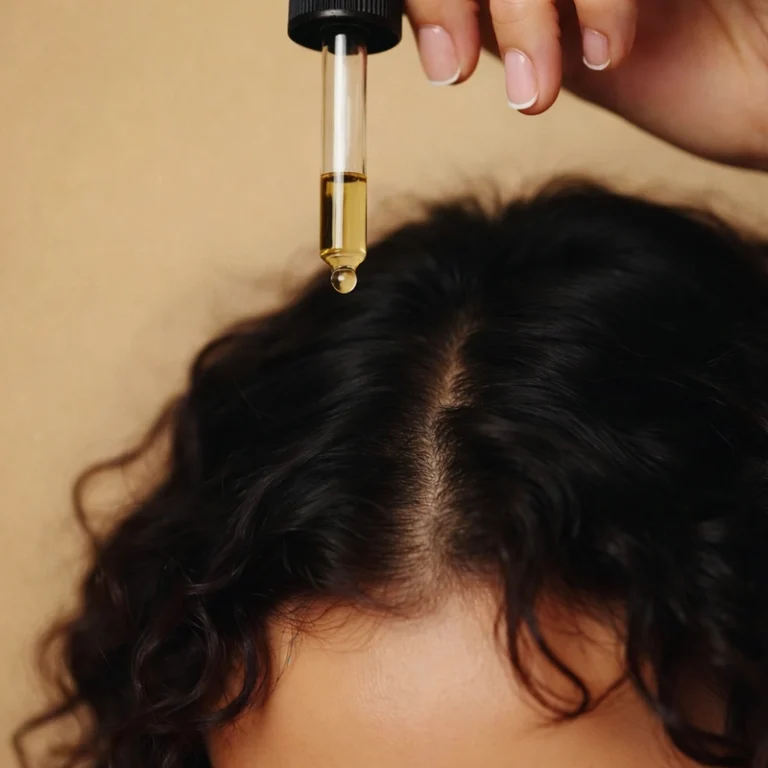
Hair Oils and Serums
Hair oils and serums can add a finishing and maintenance category to a salon collection.
Depending on the intended positioning, products may focus on:
- Shine enhancement.
- Frizz control.
- Smoothness and manageability.
- Dry hair conditioning.
- Lightweight finishing and styling.
Texture and application experience matter particularly in this category. A formula that feels too heavy may not suit clients with fine hair, while a very lightweight product may not deliver the desired feel for clients with coarse or dry hair.
Sample evaluation should therefore consider not only the formula’s initial appearance but also how it spreads, absorbs, and feels on different hair types.
Styling Products
For salons with strong styling services, a selection of styling products can extend the collection beyond cleansing and conditioning.
Potential categories include:
- Heat protection sprays.
- Hair styling creams.
- Hair sprays.
- Curl-enhancing products.
- Smoothing and finishing products.
- Texture and volume products.
The selection should reflect the styling techniques and results associated with the salon. A salon focused on blowouts and smooth finishes may have different product priorities from one specializing in curls or textured hairstyles.
Specialized Hair Care Products
Specialized products can help a salon build a more distinctive collection around its core services.
Depending on the salon’s expertise, these may include:
- Color-care products for clients who regularly color their hair.
- Curl-care products for textured and curly hair.
- Scalp-care products addressing specific scalp concerns.
- Products designed for chemically treated hair.
- Targeted products for specific hair conditions or styling needs.
Specialized products can strengthen a collection’s positioning, but they should be supported by genuine client demand and an appropriate product-development brief. Adding too many niche SKUs before validating demand can increase inventory complexity without necessarily improving the collection.
How to Plan the First Product Collection
For a first launch, a focused collection is often easier to develop, manufacture, position, and manage than a broad product range.
A practical planning process includes:
- Review the salon’s core services. Identify which services generate the strongest demand and which products could naturally support them.
- Identify recurring client needs. Use stylist recommendations, client feedback, and existing retail purchasing patterns to identify relevant product categories.
- Select complementary products. Choose products that serve connected functions rather than creating a collection of unrelated items.
- Prioritize the first SKUs. Start with the products that have the clearest connection to the salon’s services and retail opportunities.
- Plan future expansion. Keep additional categories in mind, but develop them based on actual demand and the performance of the initial collection.
The objective is to establish a collection with a clear purpose and room to grow, not to launch as many products as possible.
What’s Different About Salon Hair Care Products Compared to Retail Hair Products?
Salon hair care products should reflect the professional services and client needs that define the salon’s business. Their value comes from how well they support the salon experience, rather than simply from being positioned as premium alternatives to ordinary retail products.
For salon owners developing a private label collection, this distinction should influence product positioning, formula selection, packaging, and the relationship between professional-use and home-care products.
Products That Extend Professional Salon Services
A salon’s product range should connect naturally with the services performed by its stylists.
For example, a salon known for color services may want products that support color-treated hair between appointments. A salon specializing in repair treatments may develop complementary products for continued home care.
This requires a clear connection between the service and the product’s intended function.
During product development, the salon should define:
- Which salon service the product supports.
- What role the product plays in the client’s hair care routine.
- Whether it is intended for professional use, home use, or both.
- Which formula characteristics are important for its intended application.
These details help translate professional service knowledge into a practical product brief.
A product should not be developed solely because its category is popular. It should have a meaningful place in the salon’s service and retail offering.
Connecting Backbar and Retail Products
One important consideration for salon collections is the relationship between backbar products and retail products.
Backbar products are used by professionals during salon services, while retail products are intended for clients to use at home. Both can support the same overall hair care objective, but their usage requirements may differ.
| Consideration | Backbar Products | Retail Products |
|---|---|---|
| Primary users | Salon professionals | Individual clients |
| Main purpose | Support in-salon services | Support ongoing home care |
| Usage pattern | Used during salon treatments | Used as part of regular routines |
| Packaging priorities | Practicality and professional handling | Convenience, presentation, and usability |
| Typical format | Larger professional sizes | Consumer-oriented sizes |
A salon does not necessarily need two completely different formulas for these applications. In some projects, the same or a closely related formula can serve both professional and retail purposes.
The decision depends on the product’s intended use, dosage, packaging format, and commercial requirements.
For example, a salon may use a larger container of a conditioning treatment during appointments while offering a smaller version for clients to continue using at home.
This approach can create a more consistent product experience across professional services and retail sales. However, packaging compatibility, dispensing requirements, product stability, and labeling should be evaluated for each intended format.
Developing Products Around Client Needs
Salon professionals have direct access to information that is valuable during product development: recurring client concerns, feedback after treatments, and the performance of products used in everyday salon work.
These observations can help define more specific product requirements.
For example:
- Clients frequently reporting dryness after chemical services may indicate a need for more targeted conditioning products.
- Clients with fine hair may prefer products that deliver conditioning without an excessively heavy feel.
- Clients with curly hair may need products that support manageability and curl definition.
- Clients who regularly color their hair may benefit from a coordinated color-care collection.
These observations should be translated into clear product specifications before formulation begins.
A useful product brief should identify the target hair type or concern, intended application, desired texture, fragrance direction, performance expectations, and any relevant ingredient preferences.
This gives the manufacturer a clearer basis for formula selection or customization and makes sample evaluation more objective.
How to Choose the Right Private Label Salon Hair Products Manufacturer?
The right private label salon hair products manufacturer should be able to translate a salon’s product requirements into workable formulas, suitable packaging, and reliable production. Price and MOQ matter, but they should be evaluated alongside formulation capabilities, quality systems, customization options, and the manufacturer’s ability to support future product development.
For salon owners, the objective is to find a manufacturing partner that can support both the initial launch and the long-term development of the product collection.
Professional Hair Care Manufacturing Experience
A manufacturer with relevant hair care experience is more likely to understand the technical and commercial requirements involved in developing shampoo, conditioner, treatments, styling products, and other hair care categories.
When evaluating a supplier, consider:
- Experience with the specific product categories required.
- Availability of established formulas and customization options.
- Experience with different packaging formats.
- Production capabilities for the intended product range.
- Familiarity with export requirements for the target market.
It is also useful to distinguish between a company that primarily sources finished products and a manufacturer with its own formulation, production, and quality-control capabilities.
The latter can offer more direct support when formula adjustments, product specifications, or production requirements need to be coordinated.
Formula Selection and Customization
Not every salon needs a completely new formula for every product.
For many projects, selecting an established formula and making targeted adjustments is a practical starting point. This can reduce development complexity while allowing the salon to establish a product identity through fragrance, texture, performance characteristics, and packaging.
There are generally three approaches:
- Ready-to-brand formulas: Existing formulas that can be selected for a private label collection.
- Formula adjustments: Modifications to selected characteristics of an existing formula, subject to technical feasibility.
- Custom formulation: Developing a formula based on a more specific product brief and performance requirements.
The appropriate approach depends on how distinctive the product needs to be, the available development budget, the target specifications, and the expected production quantity.
Before development begins, clarify which aspects can be customized and which may be constrained by ingredient compatibility, formula stability, manufacturing processes, or minimum production requirements.
Product Samples and Evaluation
Samples should be evaluated before approving bulk production. A product that looks suitable in a formula description may perform differently when used on actual hair.
For salon projects, evaluation should consider both professional application and the intended client experience.
Relevant evaluation points include:
- Texture, consistency, and ease of application.
- Fragrance strength and overall sensory experience.
- Rinsability and residue, where applicable.
- Hair feel and manageability after use.
- Compatibility with the intended hair type or service.
- Packaging usability and dispensing performance.
Feedback should be specific. Instead of simply describing a sample as too heavy or too light, identify the intended hair type, application method, and desired result.
This gives the manufacturer more actionable information when adjusting the formula.
The number of sample rounds and development time will depend on the complexity of the requirements and how quickly specifications are confirmed.
Packaging and Branding Options
Packaging is an important part of a salon’s product identity, but it also affects manufacturing feasibility and project cost.
A manufacturer may offer stock bottles and containers, customized packaging options, or different labeling and printing services.
When choosing packaging, consider:
- Product viscosity and dispensing requirements.
- Bottle or container capacity.
- Packaging compatibility with the formula.
- Label dimensions and available printing areas.
- Closure type and ease of use.
- Visual consistency across the collection.
Stock packaging can be a practical option for an initial launch because it generally avoids some of the additional requirements associated with custom packaging production.
Custom packaging can offer greater visual differentiation, but it may require higher minimum quantities, add costs, and extend lead times.
The best option depends on the salon’s branding priorities, budget, and launch schedule.
MOQ and Production Costs
Minimum order quantity (MOQ) is an important factor when planning a private label salon hair care collection.
However, don’t evaluate MOQ separately from formula selection, packaging, and the number of SKUs.
A project with several products may require separate minimum quantities for each formula or packaging configuration. Even if the overall order is substantial, splitting the quantity across many SKUs can make the project more difficult to manage.
Before comparing quotations, confirm:
- MOQ for each product.
- Whether the formula is an existing or customized option.
- Whether packaging is stocked or custom-made.
- What labeling and printing services are included.
- Whether testing, documentation, or other project requirements involve additional costs.
- What is included in the quoted unit price.
A lower unit price does not always mean a more cost-effective project. Larger orders may reduce unit costs but increase inventory investment and storage requirements.
For a salon launching its first collection, balancing SKU quantity, MOQ, and expected retail demand is often more important than pursuing the lowest possible unit price.
Quality Control and Documentation
Quality control should cover more than the appearance of the finished product. It involves managing product specifications, raw materials, manufacturing processes, and finished-product checks.
When evaluating a manufacturer, ask about its quality-management procedures and the checks performed during production.
Depending on the product and market, relevant documentation may include:
- Product specifications.
- Safety Data Sheets (SDS), where applicable.
- Ingredient information.
- Relevant test reports.
- Manufacturing and quality documentation.
- Export or market-specific regulatory documents.
Documentation requirements vary according to the destination market, product classification, and applicable regulations. A manufacturer may support the preparation of relevant product information, but the salon or brand owner should confirm its own regulatory responsibilities before selling products in a particular market.
For products intended for the European market, for example, the responsible person requirement is an important part of the applicable cosmetics compliance framework. Requirements should be established before the product is placed on the market, rather than treated as a final packaging detail.
Production Capacity and Supply Reliability
A manufacturer’s ability to produce the first order is only one part of supplier evaluation. Salon owners should also consider whether the manufacturer can support repeat orders and future collection expansion.
Relevant questions include:
- Can the manufacturer maintain consistent product specifications across batches?
- Does it have sufficient production capacity for the expected order volume?
- Can it coordinate formula production, filling, labeling, and packaging?
- Are raw materials and packaging components available for repeat orders?
- Can it provide a clear production schedule?
- How are changes to product specifications or packaging handled?
Production planning is particularly important when multiple SKUs are involved. Different formulas, packaging components, and customization requirements may create different production schedules.
A clear timeline should identify the main approval points, including formula confirmation, packaging approval, bulk production, quality checks, and shipment arrangements.
Steps to Launch Your Own Salon Hair Care Products
Launching a salon hair care collection is easier to manage when the project is divided into clear stages. The key is to confirm product requirements before moving into sampling, packaging, and bulk production.
1. Define Your Product Line
Start by deciding what the collection should achieve and which products are essential for the initial launch.
Review the salon’s core services, client needs, and existing retail opportunities. Then identify the product categories that have the strongest connection to the salon’s business.
At this stage, prepare a basic product brief covering:
- Product categories and initial SKU quantity.
- Target hair types or concerns.
- Intended product functions.
- Professional-use or retail-use requirements.
- Preferred fragrance and texture.
- Expected product sizes and packaging direction.
A clear brief makes it easier to evaluate manufacturers and obtain relevant quotations.
2. Find a Private Label Manufacturer
Shortlist manufacturers based on their hair care experience, formula options, customization capabilities, MOQ, and production support.
Rather than comparing suppliers only by price, provide each manufacturer with the same basic project requirements.
This makes it easier to compare:
- Available formulas and development options.
- Minimum order quantities.
- Sample and customization costs.
- Packaging choices.
- Production lead times.
- Quality-control procedures and documentation support.
A manufacturer that understands the product requirements from the beginning can help identify technical or commercial constraints before they become delays.
3. Select Formulas and Test Samples
After choosing a manufacturing direction, select suitable formulas or begin customization based on the product brief.
Samples should be reviewed against the intended product specifications. For salon collections, testing should consider the professional application experience as well as the expected home-use experience.
If adjustments are needed, provide clear feedback about the specific characteristics that should change.
Formula approval should take place before bulk production. Where required, additional product testing and stability or compatibility assessments should also be considered as part of the development and compliance process.
4. Finalize Packaging and Branding
Once the formula direction is established, confirm the packaging and branding details.
This stage typically includes:
- Selecting bottle, jar, or container formats.
- Confirming product capacity and dispensing components.
- Preparing labels and artwork.
- Checking ingredient declarations and required product information.
- Confirming brand logos, colors, and visual consistency.
- Reviewing final packaging samples or proofs.
Artwork and labeling should be checked carefully before printing. Changes made after packaging production begins can create unnecessary costs and delays.
5. Confirm MOQ and Production Details
Before placing the production order, confirm all commercial and technical specifications.
The final agreement should cover:
- Approved formula and product specifications.
- Order quantity for each SKU.
- Packaging and labeling details.
- Unit price and payment terms.
- Production schedule.
- Quality-control requirements.
- Documentation and shipping arrangements.
For example, Mountain Sea’s standard MOQ for many private label hair care projects starts at 500 units, while some customized projects may require higher quantities depending on the formula and packaging requirements.
The production timeline also depends on the project scope. For some established-formula projects, bulk production may take approximately 30 days after formula and packaging confirmation. Custom development, packaging availability, and additional testing can extend the overall schedule.
A project timeline should therefore be agreed upon using the actual specifications rather than relying on a general lead-time estimate.
6. Prepare for Product Launch
Product preparation should continue while manufacturing is underway.
Before the products arrive, salon owners can prepare:
- Product descriptions and retail information.
- Staff product knowledge and recommendation guidance.
- In-salon product displays.
- Retail pricing and inventory arrangements.
- Product photography and promotional materials.
- A plan for collecting client feedback after launch.
Staff should understand the purpose of each product, its intended use, and which salon services or client needs it supports. This helps ensure that the collection is introduced consistently rather than treated as a group of unrelated retail products.
After launch, monitor sales, repeat purchases, and feedback from both stylists and clients. These observations can guide future formula adjustments and product-line expansion.
Conclusion
A successful private label salon hair care collection should reflect the salon’s professional services, client needs, and brand identity. Starting with a focused product range, connecting professional-use and home-care products, and selecting a capable manufacturer can make the launch more manageable and create a stronger foundation for future growth.
Mountain Sea supports private label hair care projects with more than 7,000 proven and ready-to-brand formulas, formula customization, packaging and branding services, and manufacturing support. With a 12,000 m² factory, a 500 m² R&D laboratory, and experience serving clients in more than 90 countries, Mountain Sea helps salons develop and manufacture hair care products under their own brands.
Contact Mountain Sea to discuss your salon hair care collection, request product samples, and explore private label manufacturing options.