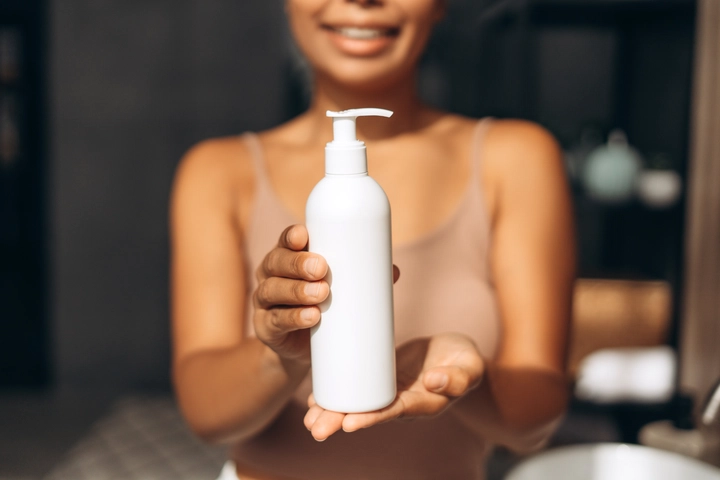
A hero hair care product is the foundation of most successful haircare brands, especially in early-stage development. It is the single SKU designed to define brand positioning, validate market demand, and concentrate early-stage marketing and manufacturing resources.
For founders planning to start a hair care brand, success does not depend on how many products are launched, but on how effectively one hero hair care product is designed, formulated, and scaled within real manufacturing constraints.
Key Points:
- A hero hair care product is the core SKU that drives early-stage brand revenue
- Successful hero products focus on one clear consumer problem (repair, frizz, scalp care, etc.)
- A single-SKU launch strategy is more effective than launching a full product line early
- Formulation quality (OEM or custom) directly impacts performance and repeat purchase rate
- Manufacturing constraints such as MOQ, packaging, and testing affect feasibility and speed to market
- The development path typically follows: problem definition → formulation → packaging → testing → launch
What Is a Hero Product in the Hair Care Industry?
A hero hair care product is a single dominant SKU that represents the brand and drives disproportionate revenue compared to other products in the range.
From a private label hair care manufacturer’s perspective, it is also the most important production decision because it determines:
- MOQ planning structure
- Packaging selection strategy
- Formula development investment level
- Market validation speed
Hero Product vs Full Product Line
| Dimension | Hero Product | Full Product Line |
|---|---|---|
| Focus | Single problem | Multi-category coverage |
| Investment | Concentrated | Distributed |
| Market testing | Fast | Slow |
| Risk level | Lower | Higher |
In most real cases, a hero product contributes 30–70% of total brand revenue, especially in early-stage private label hair care brands.

Why Most Hair Care Brands Fail at Launching a Hero Product
Most failures are structural, not creative.
A hair care manufacturer typically sees the same pattern across failed launches:
Key failure drivers
- Budget spread across too many SKUs
- Weak formulation positioning
- Ignoring MOQ and packaging constraints
- No clear consumer problem definition
Manufacturing misalignment risk
In real production environments, the following are often underestimated:
- MOQ requirements limiting flexibility
- Stability testing timelines are delaying launch
- Packaging availability affecting branding
- Regulatory compliance extends development cycles
These factors directly impact whether a hero hair care product can actually reach the market.

How to Identify the Right Hero Product for Your Brand
A successful hero hair care product starts with clarity of the problem, not product preference.
Selection logic (B2B validated model)
- Consumer problem intensity (frizz, damage, scalp, thinning)
- Usage frequency (daily vs weekly ritual)
- Visual transformation impact
- Production feasibility under OEM conditions
Strategic evaluation matrix
| Factor | High Potential | Low Potential |
|---|---|---|
| Problem clarity | Single issue | Multi-function |
| Usage behavior | Ritual-based | Occasional |
| Scalability | Stable formula | Complex system |
| Market demand | Proven category | Unvalidated niche |
For brands learning how to start a hair care brand, simplicity is usually more commercially effective than complexity.
Formulation Strategy: What Makes a Hero Product Actually Win
A custom hair care formulation determines whether a hero product becomes a repeat purchase product or a one-time trial.
Core formulation dimensions
- Functional performance (repair, hydration, smoothing)
- Sensory experience (texture, spreadability, absorption)
- Fragrance identity (mass vs premium signal)
- Stability across temperature and storage conditions
OEM vs Custom Formulation Trade-off
| Model | Advantage | Limitation |
|---|---|---|
| OEM formula | Faster launch, lower cost | Lower differentiation |
| Custom hair care formulation | Strong brand identity | Longer development cycle |
In most private label hair care manufacturer projects, a hybrid strategy is most common:
- Start with the OEM base
- gradually evolve into a custom system

Manufacturing Reality: What Brands Don’t See Early Enough
Manufacturing is often the hidden constraint behind every hero hair care product decision.
Key operational constraints
- MOQ determines financial exposure
- Packaging defines the brand perception ceiling
- Stability testing defines the launch timeline
- Compliance affects export readiness
Manufacturing impact table
| Factor | Business Impact |
|---|---|
| MOQ | Cash flow pressure |
| Packaging | Brand positioning limit |
| Testing | Time-to-market delay |
| Formula stability | Long-term scalability |
A professional hair care manufacturer always evaluates feasibility before formulation expansion, but early-stage founders often do not.
How to Build a Hero Product Without Overbuilding Your Line
A core principle in private label hair care development is focus concentration.
Single SKU strategy logic
- One problem → one product → one message
- Faster validation loop
- Lower capital risk
- Higher brand clarity
Scaling pathway
- Launch one hero hair care product
- Collect usage and performance feedback
- Optimize formulation and packaging
- Expand into adjacent SKUs only after validation
This is the most stable model for brands trying to start a hair care brand in competitive markets.

Launch Strategy: Turning One Product Into a Brand
A hero hair care product becomes a brand only when supported by structured launch execution.
Core pillars
- Brand narrative aligned with product function
- D2C-first validation strategy
- High-quality visual storytelling
- Educational content ecosystem
Execution priorities
- Website = trust layer
- Photography = perception anchor
- Content = conversion driver
A best selling hair care product strategy is not product-only—it is system execution.
Real Examples of Hero Products in Beauty & Hair Care
Across beauty categories, hero products follow a consistent pattern.
Common hero categories
- Shampoo (routine dependency)
- Hair mask (visible transformation)
- Mascara (repeat purchase driver)
- Concealer (daily use + high frequency)
Why they succeed
- Single clear benefit
- High usage frequency
- Strong visual transformation
- Easy consumer recall
These patterns remain stable across mass market and premium brands.
Step-by-Step Framework: From Idea to Market Launch
A structured execution model reduces the risk of failure in hero hair care product development.
Framework
- Define the core consumer problem
- Select product category
- Validate the custom hair care formulation direction
- Align packaging with manufacturing feasibility
- Prototype + stability testing
- Launch single SKU
- Scale based on real market data
This framework aligns both marketing intent and hair care manufacturer constraints into one system.
Conclusion
A hero hair care product succeeds when brand focus, formulation, and manufacturing are aligned from the beginning.
Most failed launches come from unclear positioning or unrealistic production planning rather than a lack of ideas.
Working with an experienced private label hair care manufacturer like Mountain Sea helps brands turn a single concept into a scalable product through OEM and custom hair care formulation support.
Contact Mountain Sea to develop your hero hair care product and turn your concept into a commercially viable product ready for market launch.
FAQ: Building a Hair Care Hero Product
Q1: What is a hero hair care product?
A core SKU that defines brand identity and drives early revenue.
Q2: Should I start with one product or multiple products?
Most successful brands start with one focused SKU.
Q3: How important is formulation?
Formulation determines performance consistency and repeat purchase rate.
Q4: Can I use OEM formulas?
Yes, many brands start with OEM before moving to custom hair care formulation.
Q5: What is the biggest manufacturing constraint?
MOQ and packaging limitations are the most common.
Q6: How does this help me start a hair care brand?
It reduces risk by focusing resources on one validated product before expansion.