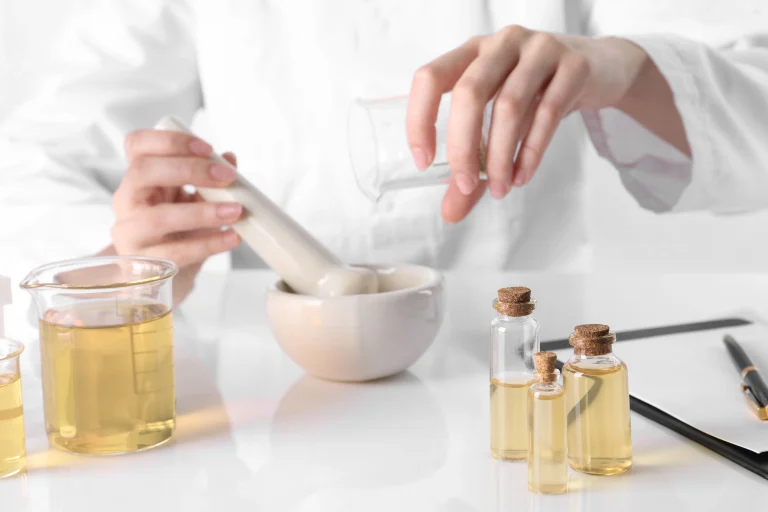
A good shampoo formula should cleanse effectively without causing excessive dryness or irritation. For a hair care manufacturer, developing this balance requires careful selection of ingredients, formulation, testing, and stability evaluation.
What Makes a Good Private Label Shampoo Formula?
A private label shampoo is more than a mixture of cleansing and conditioning ingredients. A well-designed formula needs to balance several factors so that it performs effectively while providing a comfortable experience for the hair and scalp.
Effective Yet Gentle Cleansing
The primary function of shampoo is to remove sebum, dirt, sweat, styling residue, and other buildup from the hair and scalp. The formula needs enough cleansing power to do this effectively.
However, stronger cleansing does not always mean better performance. Excessive cleansing can remove too much of the hair’s natural lipids and leave the hair feeling dry, rough, or difficult to manage.
This is why formulators carefully select and combine surfactants based on the intended product type. A daily-use shampoo may require a different cleansing system from a clarifying or oil-control shampoo.
The goal is to achieve effective cleansing without unnecessary harshness.
The Right Cleansing and Conditioning Balance
Cleansing is only one part of shampoo performance. A good formula should also help the hair maintain a smooth and manageable feel after washing.
Conditioning ingredients can reduce friction between hair fibers, improve combability, and help the hair feel softer. However, excessive conditioning can make some hair types feel heavy or greasy.
The right balance depends on the target product and hair type. For example:
- Fine hair may need lightweight conditioning.
- Dry or damaged hair may benefit from richer conditioning ingredients.
- Curly hair often needs more moisture and improved manageability.
- Oily hair may require effective cleansing with a lighter conditioning system.
A good formula is therefore not simply “high in conditioning ingredients.” It is balanced for its intended use.
Adequate Moisture and Hydration
Moisture plays an important role in how hair feels and behaves after washing. A shampoo that cleanses effectively but leaves the hair excessively dry may provide a poor overall user experience.
Humectants and moisturizing ingredients can help support a more comfortable hair feel. Common examples include glycerin, panthenol, and certain plant-derived ingredients.
However, moisture needs should be considered together with the cleansing and conditioning systems. Adding more moisturizing ingredients does not automatically make a hair shampoo better.
For this reason, formulators evaluate how different ingredients work together rather than judging individual ingredients in isolation.
A Hair- and Scalp-Friendly pH
The pH of a shampoo can affect both the hair and scalp experience. A well-designed formula should have a pH appropriate for its intended use and ingredient system.
A suitable pH can help support the hair’s surface condition and contribute to a smoother feel after washing. It can also be important for maintaining the stability and performance of certain ingredients.
pH should therefore be considered as part of the complete formula rather than treated as an isolated specification.
Good Texture and User Experience
Consumers judge shampoo by more than its cleansing performance. Texture, viscosity, spreadability, rinsing behavior, fragrance, and after-feel all influence whether a product feels high quality.
A good shampoo should generally:
- Pour or dispense easily from the package
- Spread well through wet hair
- Produce the expected level of foam for its positioning
- Rinse without excessive residue
- Leave the desired after-feel
- Maintain a consistent appearance and fragrance
These sensory characteristics need to match the product’s positioning. A professional repair shampoo, a lightweight daily shampoo, and a clarifying shampoo may all require different textures and sensory profiles.
Formula Stability and Preservation
A shampoo formula must remain stable and safe throughout its intended shelf life. Changes in temperature, storage conditions, packaging, and repeated consumer use can all affect product performance.
Stability considerations may include:
- Appearance and color
- Odor and fragrance
- Viscosity
- pH
- Ingredient compatibility
- Phase separation
- Microbiological quality
Preservation is also essential for water-based shampoo formulas. An appropriate preservation system helps control microbial growth and should be compatible with the rest of the formula.
A formula that performs well immediately after production but changes significantly during storage is not a successful commercial formula.
Related Reading: How Hair Product Manufacturers Ensure Product Quality
Key Ingredients in a Shampoo Formula
Shampoo ingredients are selected according to the functions they need to perform within the formula. Instead of focusing on one “best” ingredient, formulators typically build a system in which different ingredient groups work together.
| Ingredient Group | Main Function |
|---|---|
| Surfactants | Cleanse hair and scalp |
| Conditioning ingredients | Improve softness and manageability |
| Humectants and moisturizing ingredients | Support moisture and hair feel |
| Thickeners | Control viscosity and texture |
| Preservatives | Protect against microbial growth |
| Fragrance | Provide the desired sensory experience |
| Functional ingredients | Support specific product claims or performance |
Surfactants
Surfactants are the primary cleansing agents in most shampoo formulas. They help loosen and remove oils, dirt, and other impurities from the hair and scalp.
Different surfactants can provide different levels of cleansing, foam, mildness, and sensory performance. Formulators often combine several surfactants instead of relying on one ingredient.
The choice depends on factors such as:
- Target hair type
- Scalp condition
- Desired cleansing strength
- Product positioning
- Foam characteristics
- Compatibility with other ingredients
This is one reason why two shampoos can contain similar surfactants but still provide very different user experiences.
Conditioning Ingredients
Conditioning ingredients are ingredients that help improve the feel, smoothness, and manageability of hair after cleansing. They work by reducing friction between hair fibers, improving wet and dry combability, and helping the hair feel softer and smoother after washing.
Common conditioning ingredients include cationic conditioning agents, silicones, fatty alcohols, and certain plant-derived oils or conditioning polymers. The choice and level depend on the formula’s intended performance. A shampoo for dry or damaged hair may require stronger conditioning, while a formula for fine or oily hair may use a lighter conditioning system to avoid weighing the hair down.
Humectants and Moisturizing Ingredients
Humectants help attract and retain water, while other moisturizing ingredients can contribute to softness and improved hair feel.
Common examples include glycerin and panthenol, along with various plant-based or functional ingredients.
Their effectiveness depends on the complete formula. The same ingredient can behave differently depending on its concentration, surrounding ingredients, and product structure.
Thickeners
Thickeners help control the viscosity of a shampoo and influence how the product pours, spreads, and feels during use.
Viscosity also needs to work with the selected packaging. A formula that is too thick may be difficult to dispense, while one that is too thin may not provide the expected user experience.
Preservatives and Other Functional Ingredients
Preservatives are particularly important for water-based products because they help protect the formula from microbial contamination.
Other functional ingredients may be added to support specific product goals, such as scalp care, color protection, strengthening, volume, or moisture.
The key is to select ingredients based on the formula’s actual requirements rather than adding ingredients simply because they are popular.
How Is a Shampoo Formula Developed?
Shampoo formulation starts with defining what the product needs to achieve. Before selecting individual ingredients, hair care manufacturers usually consider the target hair type, product positioning, desired performance, sensory profile, and market requirements.
A typical shampoo formulation process includes several stages.
1. Define the Product Requirements
The first step is to establish the product concept.
For example, a brand may want to develop:
- A moisturizing shampoo for dry hair
- A sulfate-free daily shampoo
- A volumizing shampoo for fine hair
- A color-protect shampoo
- A clarifying shampoo for oily hair
Each product requires a different balance of cleansing, conditioning, hydration, texture, and other properties.
2. Select the Formula Components
Once the requirements are clear, hair care manufacturers select suitable ingredient groups and determine how they should work together.
This stage involves considering:
- Cleansing system
- Conditioning system
- Moisturizing ingredients
- Thickening system
- Preservation system
- Fragrance
- pH adjustment
- Other functional ingredients
Ingredient selection is not simply about choosing ingredients with desirable individual benefits. Compatibility between ingredients is equally important.
3. Develop the Prototype
The selected ingredients are combined into an initial prototype. The formula is then evaluated for appearance, viscosity, fragrance, foam, cleansing, rinsing, and overall hair feel.
The prototype is rarely the final formula.
Small changes in ingredient levels or processing conditions can affect viscosity, clarity, foam, stability, and sensory performance. Hair care manufacturers therefore adjust the formula based on test results and observations.
4. Evaluate Formula Performance
The prototype needs to perform according to the original product requirements.
For example, a moisturizing shampoo should provide an appropriate balance between cleansing and softness. A volumizing shampoo should avoid leaving excessive weight on the hair. A clarifying shampoo needs sufficient cleansing performance without creating an unnecessarily harsh experience.
This stage helps determine whether the formula is achieving its intended purpose.
5. Refine the Formula
Formula development is usually an iterative process.
A formulator may adjust:
- Surfactant ratios
- Conditioning levels
- Humectant concentration
- Viscosity
- pH
- Fragrance
- Preservative system
- Processing conditions
Each adjustment can affect other parts of the formula, so changes need to be evaluated as part of the complete system.
6. Finalize the Formula
Once the formula meets the required performance, sensory, stability, and safety criteria, it can be finalized for production.
At this stage, the formula should be reproducible so that the finished product can maintain consistent quality from batch to batch.

How Is a Shampoo Formula Tested?
Shampoo formula testing helps determine whether a product is stable, safe, consistent, and capable of delivering the intended performance.
Testing should be appropriate for the specific formula and market requirements rather than based on a single universal test.
Stability Testing
Stability testing evaluates how the formula changes under different storage conditions over time.
Areas commonly monitored include:
- Color and appearance
- Odor
- Viscosity
- pH
- Phase separation
- Ingredient compatibility
The purpose is to identify potential changes before the product reaches consumers.
Microbiological Testing
Because shampoo is typically a water-based product, microbiological quality is an important consideration.
Testing helps determine whether the product meets applicable microbiological requirements and whether the preservation system provides adequate protection.
Physical and Chemical Evaluation
A formula may also be evaluated for measurable characteristics such as:
- pH
- Viscosity
- Density
- Appearance
- Fragrance
- Color
These specifications help maintain consistency between production batches.
Performance and Sensory Evaluation
Laboratory measurements are important, but user experience also matters.
Depending on the product, evaluation may consider:
- Foam generation
- Cleansing performance
- Rinsing
- Wet combability
- Dry hair feel
- Smoothness
- Moisture feel
- Fragrance experience
A formula can meet technical specifications and still require adjustment if its sensory performance does not match the product concept.
Packaging Compatibility
The formula should also work with its intended packaging.
Factors such as viscosity, dispensing behavior, material compatibility, and storage conditions can affect the finished product.
This is especially important when the formula and packaging are being developed at the same time.
Related Reading: What Tests Do Manufacturers Perform on Private Label Hair Care Products?
What Should Brands Consider When Developing a Shampoo Formula?
When developing a shampoo product, brands need to consider more than individual shampoo ingredients. The formula should support the product’s positioning, target customer, performance requirements, and production needs.
Target Hair Type
The target hair type should guide the formulation strategy.
A product for dry, damaged hair may prioritize moisture and conditioning, while a formula for oily hair may focus more strongly on cleansing and lightweight after-feel.
Product Positioning
The formula should match the product’s intended market position.
For example, a premium professional shampoo may require a different sensory profile, ingredient strategy, fragrance experience, and packaging combination than an everyday mass-market product.
Ingredient Requirements
Hair care brands may have specific requirements regarding ingredients, such as sulfate-free, silicone-free, fragrance-free, plant-based, or other formulation preferences.
These requirements should be considered early because changing one ingredient can affect other parts of the formula.
Desired Performance and Claims
Product claims should be supported by the actual formula and appropriate testing.
If a brand wants to position a shampoo around moisture, volume, color protection, scalp care, or repair, the formulation needs to be designed around the intended performance rather than simply adding a related ingredient.
Texture, Fragrance, and Overall Experience
Consumers experience the entire product, not individual ingredients.
Texture, foam, fragrance, rinsing, and after-feel all contribute to how a shampoo is perceived. These sensory elements should therefore be considered during formulation development rather than added as an afterthought.
Market and Production Requirements
A commercially viable formula also needs to be suitable for manufacturing at scale.
Brands should consider factors such as:
- Formula stability
- Ingredient availability
- Production consistency
- Packaging compatibility
- Quality specifications
- Regulatory requirements
- Expected production volume
A formula that works in a small laboratory batch must be reproducible in commercial production.
Conclusion
A good shampoo formula is not defined by one popular ingredient or a single performance claim. It is a balanced system that provides effective but gentle cleansing, suitable conditioning and hydration, an appropriate pH, a good sensory experience, and reliable stability and preservation.
The development process then turns these requirements into a practical formula through ingredient selection, prototyping, testing, refinement, and production validation. Mountain Sea provides professional shampoo formulation and manufacturing support, helping brands develop formulas that match their target hair type, product positioning, and performance requirements.
Looking to develop your own shampoo product? Contact Mountain Sea to discuss your formula requirements and start your shampoo development project.