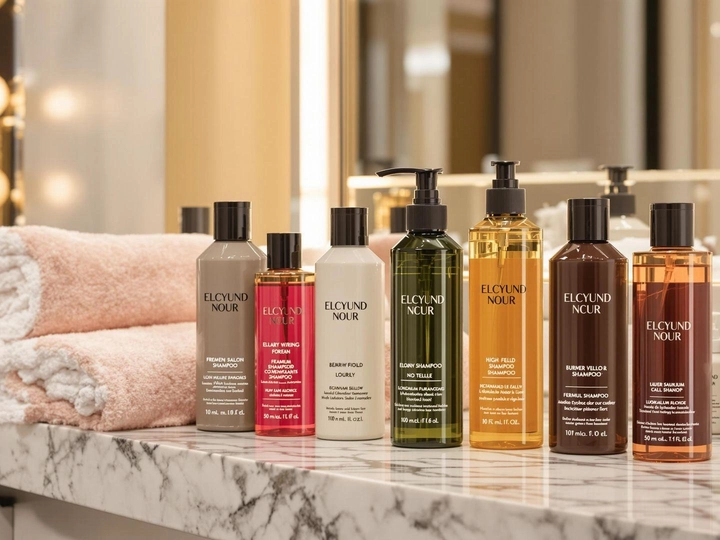
Hair treatment manufacturers do more than produce conditioning products. They help brands translate product concepts into workable formulations, evaluate finished-product performance, and establish manufacturing processes that deliver consistent results at scale. For brands developing private label hair treatments, understanding these stages helps clarify what to expect from a manufacturing partner and how to prepare a product for production.
Understanding Different Hair Treatment Product Requirements
Hair treatments cover several product formats, each with different conditioning goals, application methods, and performance expectations. A deep conditioning mask, a bond repair treatment, and a lightweight leave-in product may all belong to the same category, but they cannot necessarily use the same formulation approach.
The main product types include:
| Product Type | Primary Purpose | Key Development Considerations |
|---|---|---|
| Hair Masks | Intensive conditioning, softness, and improved manageability | Rich conditioning, suitable texture, and a finish that does not feel excessively heavy |
| Deep Conditioning Treatments | More intensive conditioning for dry or stressed hair | Conditioning performance, spreadability, softness, and rinse-off feel |
| Bond Repair Treatments | Care for damaged or chemically treated hair | Formula suitability for the intended repair positioning and substantiated product claims |
| Leave-In Treatments | Ongoing conditioning without rinsing | Lightweight application, even distribution, residue, and compatibility with styling products |
These categories can overlap. For example, a hair mask may also be positioned as a deep conditioning treatment. The product’s actual function, formulation, and directions for use matter more than the name used on its packaging.
The first development decision should be the product’s intended role within the hair care range. This means identifying the target hair type, desired conditioning benefits, and expected finish before selecting a formula.
For example:
- A treatment for coarse or dry hair may prioritize richer conditioning, softness, and easier manageability.
- A treatment for fine hair may need to improve softness and detangling without leaving the hair flat or coated.
- A treatment for chemically treated hair may require a more specific performance focus that reflects its intended care positioning.
Defining these requirements gives the manufacturer a clearer starting point for formulation development. It also reduces the risk of creating a product that sounds appealing in its ingredient list but does not deliver the experience expected by its target users.
Formulation Development and Customization for Hair Treatments
Hair treatment formulation development involves selecting and combining ingredients to achieve the product’s intended function, texture, and application experience. The goal is not simply to include popular conditioning ingredients, but to build a formula in which the ingredients work together and support the product’s positioning.
Selecting Ingredients for the Product’s Purpose
Different ingredient groups contribute different functions to a hair treatment formula. Their suitability depends on the product format, desired performance, ingredient compatibility, and overall formulation system.
| Ingredient Group | Potential Role in the Formula |
|---|---|
| Conditioning agents | Support detangling, softness, and manageability |
| Fatty alcohols | Help build cream structure and contribute to a conditioning feel |
| Oils and emollients | Support softness, lubrication, and a richer sensory profile |
| Proteins and hydrolyzed proteins | May contribute to specific conditioning or hair-care positioning, depending on the formula |
| Silicones | Can improve slip, smoothness, and the feel of the hair surface |
Ingredient selection should always consider the complete formulation rather than the perceived benefits of individual ingredients. An ingredient’s effect can vary according to its concentration, the other materials in the formula, and the overall formulation system.
For example, increasing conditioning materials does not automatically make a product better. An overly rich formula may leave fine hair feeling heavy, while a lightweight formulation may not provide enough conditioning for coarse or heavily damaged hair.
Balancing Formula Structure and Product Experience
A successful formulation needs to balance several connected requirements:
- Conditioning performance: The intended level of softness, detangling, and manageability.
- Texture and viscosity: Whether the product has the right consistency and spreads easily through the hair.
- Application method: Whether the formula is designed for rinsing or leave-in use.
- Formula stability: Whether the ingredients remain compatible and the product maintains its intended characteristics.
- Cost and manufacturing feasibility: Whether the formulation can meet the target product cost and be produced reliably.
These factors can influence one another. Adjusting the conditioning system to improve softness, for instance, may also change viscosity, application feel, or the amount of residue perceived after use.
A clear product brief helps guide these decisions. It should identify the target hair type, product format, desired performance, texture preference, intended use, and relevant ingredient or market requirements.
Depending on the project, a hair care product manufacturer may recommend an existing formulation, adjust a proven formula, or develop a new one. The right approach depends on how specific the requirements are and whether an existing formulation can meet them without compromising other product characteristics.
Evaluating Hair Treatment Product Performance
A hair treatment should be evaluated according to how well its finished performance matches its intended purpose. An ingredient list alone cannot establish whether a formula delivers the desired conditioning effect, application experience, or final hair feel.
A useful evaluation considers the product throughout its intended use, rather than focusing on a single characteristic.
Conditioning and Combing Performance
Conditioning performance is central to many rinse-off hair treatments, but softness is not the only measure of effectiveness.
A product may leave hair feeling soft but provide insufficient detangling. Another may improve combability but leave a finish that feels too coated for its target users.
Two useful evaluation dimensions are:
- Wet combability: How easily the hair can be detangled during or after rinsing. This is particularly relevant for masks and other rinse-off treatments.
- Dry combability: How manageable the hair feels after drying, helping assess whether the conditioning effect supports the intended finish.
These observations are not interchangeable. A formula may perform well during wet detangling but produce a different result once the hair is dry.
Where appropriate, comparative evaluations using standardized hair tresses can help manufacturers and brands assess samples under more consistent conditions.
Texture and Application
Texture influences how a treatment is dispensed, distributed, and applied. A product may have an appealing consistency in its container but still be difficult to spread through the hair.
Key evaluation points include:
- Ease of spreading and distribution
- Viscosity and suitability for the intended packaging
- Application feel, including any excessive stickiness or waxiness
- Whether the product can be applied evenly without requiring an unnecessarily large amount
A thick cream may communicate a rich treatment experience, but high viscosity alone does not guarantee better conditioning. If the formula is difficult to distribute, application may become less convenient.
Rinse-Off Experience and Final Hair Finish
For rinse-off treatments, performance evaluation should continue beyond the immediate conditioning effect. Rinse-off ease, the feel of the hair after rinsing, and any undesirable residue also matter.
The expected finish should reflect the product’s positioning. Depending on the target user and formulation, brands may prioritize:
- Smoothness and shine
- Softness and manageability
- A lightweight, non-coated feel
- Conditioning without excessive loss of volume
There is no single ideal finish for every hair treatment. A rich repair mask and a lightweight treatment for fine hair should not necessarily be judged against the same sensory expectations.
The most useful sample evaluation starts with defined product criteria. Rather than asking whether a sample simply feels good, brands and manufacturers should assess whether it meets the performance requirements established in the product brief.
Hair Treatment Manufacturing and Quality Control
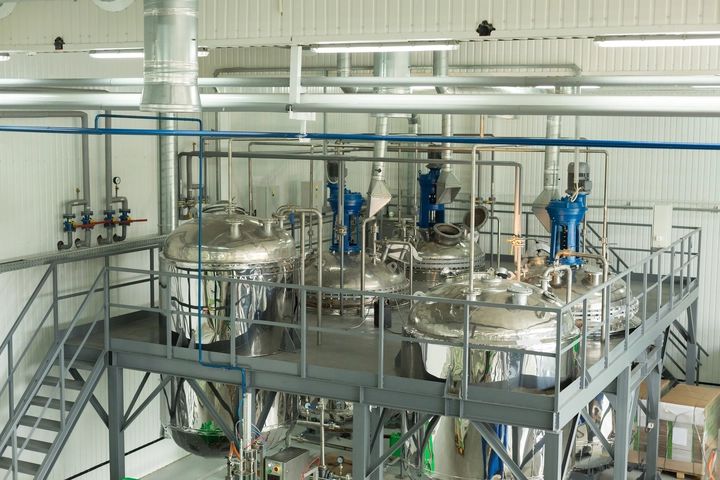
A successful laboratory formula does not automatically guarantee successful bulk production. Hair treatment manufacturing must account for formula stability, processing conditions, packaging compatibility, and the ability to reproduce the approved product consistently.
Formula Stability and Packaging Compatibility
Stability and packaging compatibility are closely related parts of product readiness. The formula must maintain its intended characteristics during storage, while the selected packaging must remain suitable for the finished product.
Depending on the formulation, stability evaluation may consider:
- Changes in appearance, color, or odor
- Viscosity changes or physical separation
- Maintenance of the product’s intended texture
- Other formula-specific characteristics over the expected storage period
Packaging selection should also account for product viscosity, dispensing requirements, consumer use, and compatibility between the formula and packaging materials.
Common options include jars, tubes, and bottles, with the most suitable format depending on the product:
- Jars: May suit thicker masks and creams that consumers need to scoop out.
- Tubes: Can offer convenient dispensing for creams and treatments with suitable viscosity.
- Bottles: May work for more fluid treatments, depending on the dispensing design.
The formula should be assessed with the intended packaging to identify potential issues such as material interaction, leakage, dispensing difficulties, or changes in product characteristics.
Choosing packaging solely by appearance or unit price can create problems later if the container does not work well with the finished formula.
Production Adaptation and Process Control
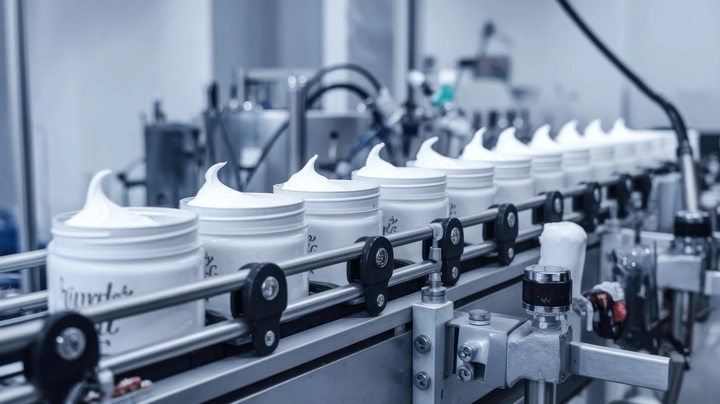
Laboratory formulation and bulk manufacturing take place under different conditions. A formula that performs well in a small development batch may require process adjustments before it can be produced consistently at a larger scale.
Important manufacturing considerations include:
- Mixing equipment and batch size
- Processing conditions and ingredient incorporation order
- Heating and cooling requirements, where applicable
- Control of relevant production parameters
- Consistency between the approved formula and bulk production
The specific requirements depend on the formulation and production equipment. The objective is to establish a process that can reproduce the approved product specifications, rather than assuming a successful laboratory sample can be scaled up without further evaluation.
Batch Consistency and Quality Control
Batch consistency is essential for brands that need finished products to maintain the same expected characteristics across production orders.
A quality control plan may include the following checks:
| Quality Check | What It Helps Assess |
|---|---|
| Appearance, color, and odor | Whether the finished product matches its approved characteristics |
| Viscosity and physical properties | Whether the product maintains its specified texture and consistency |
| pH, where applicable | Whether the product meets its relevant formulation specifications |
| Product weight or filling quantity | Whether filling meets the required quantity specifications |
| Packaging and labeling | Whether containers, closures, and labels meet agreed requirements |
| Formula-specific tests | Whether additional product requirements have been met |
Not every test applies to every formulation. The quality control plan should be defined according to the product, manufacturing process, and applicable market requirements.
When evaluating hair treatment manufacturers, brands should understand how product specifications are established, how production batches are checked, and how deviations are handled. A documented quality process helps connect the approved sample with the finished bulk product.
Private Label Hair Treatment Manufacturing: From Samples to Bulk Production
Private label hair treatment manufacturing allows brands to sell products under their own brand identity while working with a manufacturer for formulation, production, and related project support.
Although project details vary, the cooperation process generally follows five stages:
1. Confirming the Product Requirements
The project begins with a product brief covering:
- Product type and target hair type
- Intended conditioning benefits and performance expectations
- Preferred texture and application method
- Target market and relevant ingredient requirements
- Packaging preferences and target order quantity
A more complete brief helps focus sample development and reduces unnecessary rounds of adjustment.
2. Developing and Evaluating Samples
Based on the brief, the manufacturer can recommend an existing formulation, adjust a proven formula, or develop a custom formulation.
Brands can then assess whether the sample matches the intended product direction. Evaluation may cover texture, spreadability, conditioning effect, wet and dry combability, rinse-off experience, and final hair feel.
Specific feedback makes revisions more effective. For example, requesting a lighter finish or improved detangling gives the manufacturer clearer direction than simply describing a sample as too heavy or insufficiently conditioning.
3. Adjusting the Formula and Confirming Specifications
Formula adjustments should be made against the agreed product requirements. Since changing one characteristic may affect others, each revised sample should be evaluated as a complete product.
Once the formula meets expectations, the final specifications should be confirmed. These may include the formula, appearance, texture, relevant performance criteria, and other agreed quality parameters.
The approved sample and specifications provide the reference for subsequent production.
4. Selecting Packaging and Finalizing Branding
Packaging selection can take place alongside formula development, but the final choice should be checked for compatibility with the product.
Brands may choose stock packaging or explore customized options depending on their positioning, order requirements, and budget. Label design, logo printing, product information, and packaging artwork also need to be confirmed before production.
Packaging availability and customization requirements can affect project schedules and minimum order quantities, so these details should be discussed early.
5. Moving into Bulk Production and Delivery
Once the formula, packaging, artwork, and production specifications are approved, the project can move into bulk manufacturing.
The production stage typically includes:
Preparing finished products for shipment.tion, while a custom formulation or customized packaging project may require additional development and approval stages.
- Preparing the confirmed formula and manufacturing the bulk batch.
- Filling products into the approved packaging.
- Applying labels and other branding elements.
- Conducting the required quality checks.
Conclusion
Choosing a hair treatment manufacturer involves more than comparing product catalogs or production capacity. The right manufacturing partner should understand the product’s intended performance, develop a suitable formulation, evaluate the finished product, and establish a reliable process for bulk production.
Mountain Sea provides private label hair care formulation, sample development, packaging, and manufacturing support to help brands turn hair treatment concepts into finished products. Contact Mountain Sea to discuss a hair treatment project, explore available formulations, or request product samples.