When selling hair care products in the US, brands need to understand US consumer preferences, select the right products, review cosmetic compliance and claims, prepare appropriate labeling, choose suitable sales channels, and work with a manufacturer that understands the US market.
Understand the US Hair Care Market
The US hair care market includes a wide range of consumers, hair types, product categories, and price segments, so brands should define their target customer before developing products.
A common mistake for international brands is assuming that a product that performs well in another country will automatically work in the United States. Consumer expectations, hair concerns, preferred textures, fragrance preferences, packaging, and purchasing habits can vary significantly between markets.
Before selecting a formula, brands should research:
- Target customers: age, lifestyle, hair type, and purchasing behavior
- Primary hair concerns: dryness, damage, frizz, scalp care, thinning, curls, or color protection
- Competitor products: formulas, claims, packaging, sizes, and price points
- Product positioning: mass-market, premium, professional, natural, or ingredient-focused
- Sales channels: Amazon, DTC, salons, retail stores, or social commerce
- Customer expectations: performance, convenience, ingredients, packaging, and brand story
For example, a brand targeting consumers with damaged or color-treated hair may build its product line around sulfate-free shampoo, repair conditioner, intensive hair masks, and leave-in treatments. A brand targeting consumers interested in scalp care may instead prioritize scalp serums, lightweight oils, or specialized shampoos.
The goal is not to develop the largest possible product range. It is to create a focused product line that solves a clearly defined consumer problem.
Choose the Right Hair Care Products for the US Market
Choosing hair care products in the US should start with the target customer and the problem each product is designed to address.
A new haircare brand does not necessarily need ten or twenty SKUs at launch. A smaller collection of complementary products can make it easier to manage inventory, packaging, manufacturing costs, and marketing.
Common Product Categories
| Product Category | Common Positioning | Potential Sales Channels |
|---|---|---|
| Shampoo | Moisture, repair, scalp care, color protection | Amazon, DTC, Salon |
| Conditioner | Hydration, repair, smoothness | Amazon, DTC, Salon |
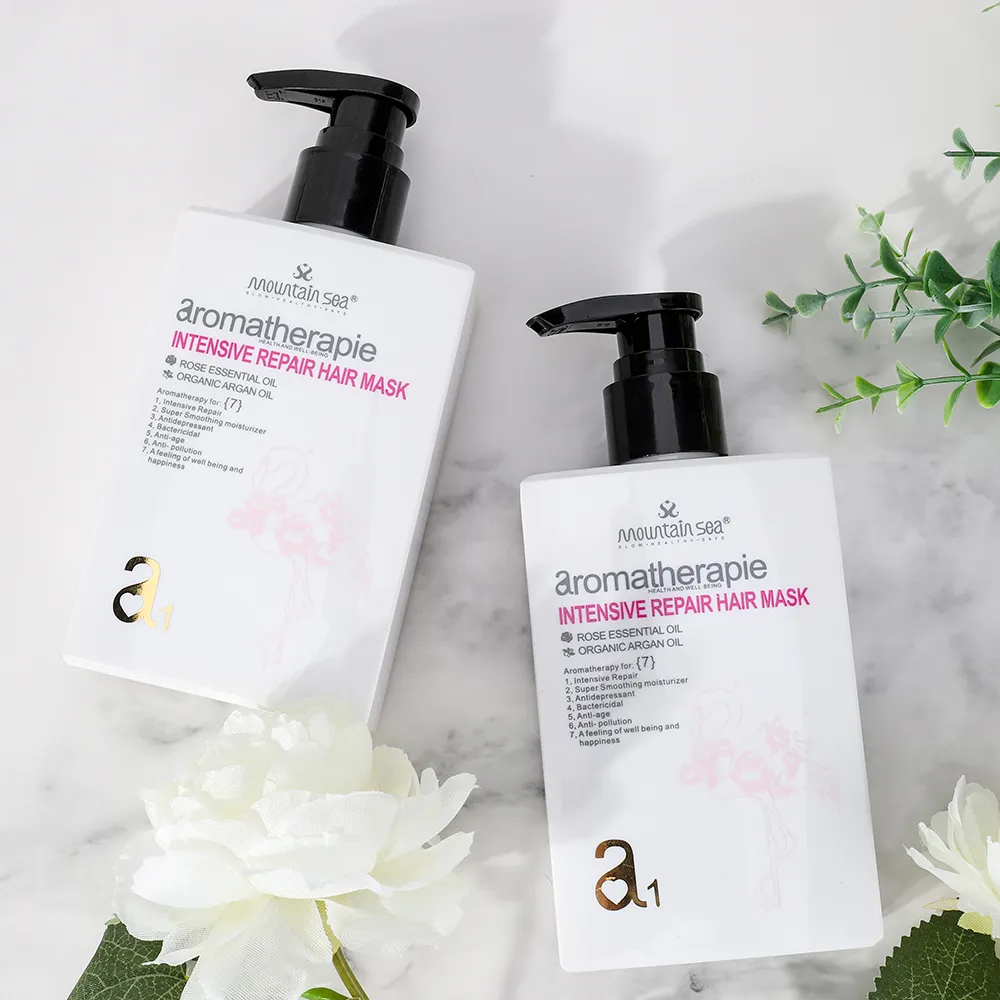
| Hair Mask | Intensive repair, moisture, damage care | DTC, Salon |
| Hair Oil | Shine, frizz control, nourishment | DTC, Social Commerce |
| Hair Serum | Scalp care, smoothing, hair appearance | DTC, Amazon |
| Leave-in Treatment | Detangling, conditioning, heat protection | DTC, Salon |
| Styling Products | Curl definition, hold, texture | Amazon, Salon |
Product selection should also reflect the intended price point. A premium hair oil may justify a more sophisticated bottle and secondary packaging, while a high-volume shampoo may require different packaging and cost structure.
Brands should also consider whether products will be sold individually or as a system. For example, a repair-focused line could include a shampoo, conditioner, hair mask, and leave-in treatment that work together. This can create opportunities for bundles and repeat purchases without requiring an excessive number of formulas.
Understand US Cosmetic Regulations for Hair Care Products
Understanding US cosmetic regulations is essential before launching a hair care product because products sold in the United States must comply with applicable federal requirements even when they are manufactured outside the country.
Many shampoos, conditioners, hair masks, oils, and other cleansing or appearance-enhancing products are regulated as cosmetics. However, classification depends on the product’s intended use and claims. FDA explains that cosmetic products generally do not require premarket FDA approval, but companies are responsible for ensuring product safety and complying with applicable laws.
What Is MoCRA?
The Modernization of Cosmetics Regulation Act of 2022 (MoCRA) introduced significant changes to the US cosmetics regulatory framework.
Depending on the business and product circumstances, brands and responsible parties may need to consider requirements related to:
- Cosmetic facility registration
- Cosmetic product listing
- Safety substantiation
- Serious adverse event reporting
- Records and regulatory compliance
- Additional requirements established under MoCRA
FDA notes that facility registration and cosmetic product listing are mandatory under MoCRA, subject to certain exemptions, including some small-business exemptions.
This means brands should discuss regulatory responsibilities with their private label manufacturer, regulatory consultant, or other qualified professionals before launching products in the US.
Product Safety Matters
Cosmetic companies have a legal responsibility to ensure that their products are safe when used according to their labeling or customary use. FDA does not generally pre-approve cosmetic products before they enter the market, so brands cannot treat the absence of premarket approval as an absence of compliance responsibilities.
For a private label brand, this makes private label manufacturer selection particularly important. A qualified hair care manufacturer should have appropriate quality-control procedures and be able to provide relevant product information and testing documentation.
Review Product Claims and Labeling Requirements
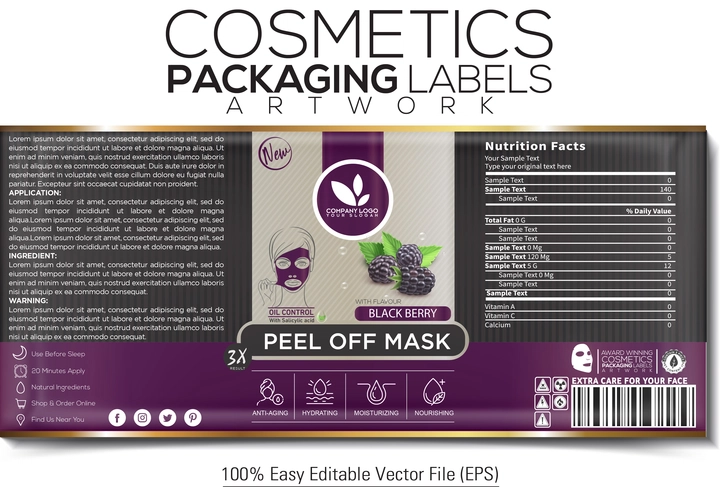
Hair care product labeling requirements should be reviewed before packaging artwork is finalized, because the words used on a bottle, website, advertisement, or other marketing material can affect how a product is regulated.
Be Careful With Hair Care Claims
A cosmetic product can become subject to drug requirements if its intended use is to treat or prevent disease or affect the structure or function of the body. FDA specifically notes that claims such as restoring hair growth can cause a product marketed as a cosmetic to be considered a drug.
For example, there is an important distinction between claims such as:
| Lower-Risk Cosmetic Positioning | Potential Drug Claim |
| Helps improve the appearance of thinning hair | Regrows hair |
| Helps reduce the appearance of frizz | Treats a scalp condition |
| Helps hair look thicker | Prevents hair loss |
| Adds shine and softness | Restores hair growth |
| Helps moisturize dry hair | Treats dandruff |
This does not mean every phrase on the left is automatically compliant in every context. Claims should be reviewed based on the complete product presentation, including the label, website, advertising, and other promotional materials. FDA states that cosmetic labeling claims must be truthful and not misleading.
This is particularly important for products positioned around hair growth, dandruff, scalp treatment, or other therapeutic benefits.
What Should a US Cosmetic Label Include?
US cosmetic labels have specific requirements covering information such as product identity, net quantity, ingredient declaration, and other required statements. FDA’s cosmetic labeling requirements are established under federal law and regulations, including 21 CFR Parts 701 and 740.
Before printing packaging, brands should review:
- Product identity or intended use
- Net quantity of contents
- Ingredient declaration
- Business name and required address information
- Directions for use where appropriate
- Required warnings
- Product claims
- Packaging and label presentation
Hair care product labeling requirements also apply to imported cosmetics, so an overseas manufacturing location does not remove the need to comply with US labeling rules.
For private label brands, it is usually more efficient to review the formula, claims, label copy, and packaging specifications together rather than treating regulatory review as the final step before production.
Choose the Right Sales Channel
The best channel for a hair care brand depends on its target customer, product positioning, marketing capabilities, and available budget. The same product may perform differently on Amazon, a DTC website, in salons, or through retail distribution.
| Channel | Strengths | Considerations |
| Amazon | Large customer base and search-driven purchasing | Competition, fees, reviews, and advertising |
| DTC Website | Brand control and direct customer relationships | Requires traffic generation and marketing |
| TikTok / Social Commerce | Strong potential for visual and trend-driven products | Requires content and creator marketing |
| Salons | Suitable for professional and treatment-oriented products | Requires professional positioning and relationships |
| Retail | Broad physical distribution and brand visibility | Higher requirements for volume, pricing, and distribution |
The sales channel should therefore be considered before finalizing the product. Packaging size, price, product claims, bundle structure, and even formula selection can be influenced by where the product will be sold.
How to Choose a Hair Care Manufacturer for the US Market
Choosing a hair care manufacturer for the US market requires more than comparing minimum order quantities and unit prices. The manufacturer should be able to support the technical, production, quality, packaging, and market requirements involved in launching the product.
1. US Market Experience
A private label hair care manufacturer that has worked with US brands may have a better understanding of common product expectations, packaging formats, documentation, and communication requirements.
Ask whether the hair care manufacturer has experience exporting hair care products to the United States and whether it has worked with brands targeting US consumers.
2. Private Label and Custom Formulation Capabilities
Brands may choose between ready-made formulas and custom development.
A manufacturer may offer:
- Ready-made private label formulas
- Custom formulation
- Fragrance adjustment
- Texture modification
- Ingredient selection
- Product format development
- Packaging customization
The right approach depends on whether the brand needs speed and lower development costs or a more differentiated product.
3. Testing and Quality Control
Before launch, brands should understand what testing and quality-control procedures are available.
Depending on the product, this may include:
- Microbiological testing
- Stability testing
- Physical and chemical testing
- Packaging compatibility
- Batch quality control
- Raw material inspection
A strong quality system can reduce the risk of inconsistent products, packaging problems, or avoidable quality issues after launch.
Related Reading: How Hair Product Manufacturers Ensure Product Quality
4. Packaging and Label Support
Packaging is part of the product strategy, not simply a final design decision.
The manufacturer should ideally be able to coordinate:
Formula → Container → Label → Packaging → Production
This can simplify communication and reduce the risk of inconsistencies between the formula, packaging specifications, and final product information.
5. MOQ and Production Lead Time
MOQ matters, especially for startups and smaller brands, but it should not be the only selection criterion.
A manufacturer offering a very low MOQ may not provide the formula development, testing, packaging, quality control, or production capabilities your brand needs.
Instead, evaluate the full manufacturing package:
| Factor | What to Ask |
| MOQ | What is the minimum order per SKU? |
| Formula | Are ready-made and custom formulas available? |
| Packaging | Can the manufacturer source and customize packaging? |
| Testing | What product testing is available? |
| Quality | What quality-control procedures are used? |
| Lead Time | How long does sampling and production take? |
| Export | Does the manufacturer regularly ship to the US? |
For brands entering a new market, the right manufacturing partner can help connect product development with the practical requirements of commercial launch.
Related Reading: Private Label Hair Product MOQ: What Brands Need to Know
US Hair Care Product Launch Checklist
Before launching hair care products in the US, brands can use the following checklist:
- Define the target customer
- Research competitors and product positioning
- Select the initial product categories
- Choose ready-made or custom formulas
- Review ingredients and product safety
- Review product claims
- Check applicable US cosmetic requirements
- Prepare compliant product labeling
- Select and test packaging
- Confirm product testing requirements
- Choose a qualified manufacturing partner
- Confirm MOQ and production lead time
- Calculate product, packaging, freight, and channel costs
- Select the primary sales channel
- Prepare product content and marketing materials
- Confirm responsibilities for regulatory and post-market requirements
- Plan the initial product launch and customer feedback process
A structured launch process allows brands to identify potential problems before they become expensive changes during production or after products reach customers.
Conclusion
Selling hair care in the US requires planning across formulation, compliance, labeling, channels, and manufacturing. Clear positioning and early claim review help brands enter the market more effectively.
A strong manufacturing partner streamlines development, testing, and production. Mountain Sea offers end-to-end private label and custom formulation support.
Contact Mountain Sea to discuss product ideas, request samples, or explore private label options.